

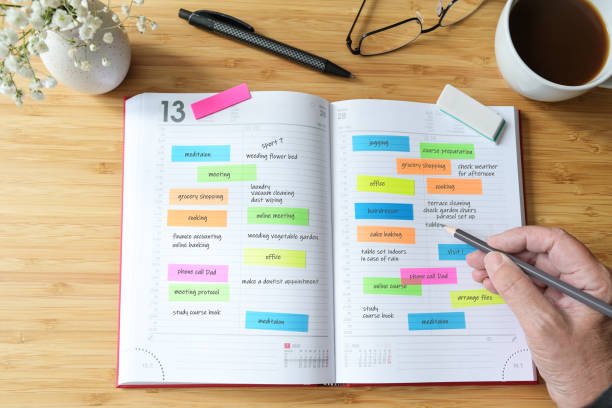
Homework has a funny way of taking over your day.
You might have only three assignments, but somehow they turn into an entire evening of reading, writing, problem-solving, and trying not to check your phone every five minutes. Then, when a deadline gets close, the pressure increases and you end up working late.
I’ve learned that managing homework isn’t really about becoming more disciplined overnight. It’s about making your workload visible, deciding what needs attention first, and giving yourself enough time to finish without rushing.
Recent research supports this approach. A 2026 meta-analysis covering 67 studies and more than 40,000 Chinese students found a moderate negative relationship between time-management habits and academic procrastination. Another 2025 study focusing specifically on online homework found that students who managed their homework time effectively were more likely to complete their work and showed less disengagement.
So, if homework constantly feels like something you’re chasing, it’s worth changing the way you organize it.
Start by Writing Everything Down
The first thing I’d do is stop trying to remember every assignment.
Take a piece of paper, open a notes app, or use a calendar and write down everything you currently need to do. Include small assignments as well as major projects.
For example:
- Mathematics worksheet — Monday
- Biology reading — Tuesday
- History presentation — Thursday
- Chemistry test — Friday
- Research paper — Friday
Once everything is written down, the workload usually feels less mysterious.
The next step is to estimate how long each task will take. Don’t worry about getting the number perfect. You’re trying to create a useful estimate, not predict the future.
If you think a biology reading will take 30 minutes, give yourself perhaps 40 minutes. If a research paper could take three hours, don’t pretend you’ll finish it during one 45-minute study session.
Over time, you’ll become better at estimating your own working speed.
Decide What Deserves Your Attention First
One of the biggest mistakes students make is treating every assignment as equally urgent.
They’re not.
If you have a short worksheet due tomorrow and a major project due next week, you need to deal with both—but you shouldn’t necessarily spend your entire evening on the smaller task.
I like dividing homework into three basic categories:
- Urgent: due soon or connected to an upcoming test.
- Important: large projects or assignments that require several sessions.
- Quick: small tasks that can be completed relatively quickly.
This gives you a starting point.
It also prevents the common situation where you spend an hour finishing easy assignments simply because they’re satisfying to cross off your list.
A useful question is: “What will cause the biggest problem if I don’t work on it today?”
Start there.
Break Large Assignments Into Smaller Pieces
“Finish my research paper” isn’t a very helpful task.
It’s too large, and because you don’t know exactly where to begin, it’s easy to put it off.
Instead, divide it into pieces:
Day 1: Understand the assignment
Read the instructions carefully and decide what the teacher actually wants.
Day 2: Find your sources
Collect the information you need and make notes while you research.
Day 3: Create an outline
Decide what you want each section to say before you start writing.
Day 4: Write the first draft
Don’t worry about making every sentence perfect.
Day 5: Edit and submit
Check your argument, spelling, references, formatting, and submission requirements.
Suddenly, the paper doesn’t feel like one enormous job.
This approach also gives you an early warning if something goes wrong. If you can’t find enough reliable information on Day 2, you still have time to ask your teacher or find another source.
For students working on specialized subjects, getting appropriate academic guidance can also help clarify difficult requirements. For example, healthcare homework writing support can be useful when you need help understanding how a healthcare assignment should be researched or structured.
Put Homework Into Specific Time Slots
There’s a big difference between saying “I’ll study tonight” and saying “I’ll work on chemistry from 7:00 to 7:45.”
The second one gives you something concrete to start.
Try creating a simple afternoon or evening schedule:
- 4:00–4:30 — Mathematics
- 4:30–4:45 — Break
- 4:45–5:30 — Biology
- 5:30–6:15 — Dinner and rest
- 6:15–7:00 — History
- 7:00–7:15 — Break
- 7:15–8:00 — Chemistry
You don’t have to copy this exact structure. The important part is assigning a beginning and an end to your work.
Don’t fill every minute, either.
Homework often takes longer than expected. A difficult question can take 20 minutes by itself, or you may need to find another source for an assignment. Leaving some spare time makes your schedule much easier to maintain.
Work in Focused Sessions
You don’t necessarily need to sit at your desk for three straight hours.
Try working for a defined period and then taking a proper break. Depending on the assignment, that might mean 25 minutes of work followed by five minutes away from your desk, or 45–50 minutes followed by a longer break.
The exact number isn’t important.
What matters is that your work period has a clear purpose.
For example:
Bad plan:
“Study biology.”
Better plan:
“Spend 40 minutes reviewing cellular respiration and answer the practice questions.”
The second version gives you a target.
During that period, try to work on one subject instead of jumping between five different tasks. Research on homework behavior has increasingly focused on how students use their homework time—not simply how many minutes they spend doing it. Studies have found that different combinations of homework time, time management, and procrastination are associated with differences in homework completion and achievement.
In other words, more homework time isn’t automatically better homework time.
Make Your Phone Less Interesting
This is probably one of the easiest changes to make and one of the hardest to stick with.
If your phone is sitting beside your notebook, you’re giving yourself a distraction every few seconds.
You don’t need to throw it away. Just create some distance.
Put it:
- In another room.
- Inside your bag.
- On silent.
- Face down and out of reach.
- On a focus mode that blocks unnecessary notifications.
If you need your phone for research, use it for that purpose and then put it away again.
The same applies to your laptop. If you’re writing an essay, having social media, videos, messaging apps, and unrelated websites open makes it much easier to lose an hour without realizing it.
One recent study of university students identified several distinct homework behavior patterns involving time spent, time management, and procrastination. The researchers found that these profiles were related to homework completion and students’ level of disengagement.
You don’t need perfect concentration. You just need to make distraction slightly harder.
Don’t Wait Until You Feel Motivated
Sometimes you aren’t avoiding homework because you’re lazy.
You’re avoiding it because the assignment is confusing, boring, difficult, or simply too large.
Waiting until you “feel motivated” can make the situation worse.
Instead, make the first step ridiculously small.
Open the document.
Read the instructions.
Write one sentence.
Solve one question.
Find one source.
Give yourself five minutes.
Once you’ve started, you may find that continuing isn’t nearly as difficult as you imagined.
Procrastination is closely connected with time-management behavior. The 2026 meta-analysis mentioned earlier found a moderate negative correlation between time-management disposition and academic procrastination, although the strength of the relationship differed between educational levels.
That doesn’t mean making a timetable will magically eliminate procrastination. It does suggest that planning, monitoring your time, and starting tasks earlier are useful behaviors to develop.
Don’t Destroy Your Sleep to Finish Homework
Staying up late can feel like the only solution when you’re behind.
Once in a while, it may happen. But if you’re regularly working until one or two in the morning, your schedule needs attention.
Sleep is not wasted study time.
A 2026 study involving 125 medical students found that poorer sleep quality and greater procrastination were each associated with lower academic performance. The researchers also found that the negative relationship between sleep quality and performance was stronger among students with higher levels of procrastination.
That study was conducted with medical students, so its results shouldn’t automatically be applied to every student. Still, it illustrates an important point: constantly sacrificing sleep isn’t a sensible long-term homework strategy.
Instead, work backward from your bedtime.
If you want to sleep at 11:00 p.m., decide when homework needs to stop. Then use your earlier hours more deliberately.
Keep Track of Where Your Time Actually Goes
Here’s a simple experiment I’d recommend.
For one week, keep track of how long your homework really takes.
You don’t need a complicated spreadsheet.
Write something like:
Monday
- Mathematics: 45 minutes
- Biology: 35 minutes
- History: 70 minutes
- Phone/social media: 40 minutes
At the end of the week, look for patterns.
Maybe mathematics always takes longer than expected.
Maybe you lose 30 minutes after dinner.
Maybe you’re extremely productive for the first hour but struggle afterward.
That information is useful because your next schedule can be based on your actual behavior rather than what you think you should be able to do.
Give Yourself a Weekly Planning Session
You don’t have to plan your entire life.
Spend about 10–15 minutes once a week looking at what’s coming.
Check:
- Upcoming deadlines
- Tests and quizzes
- Large projects
- Readings
- Activities outside school
- Days when you’ll have less time
Then decide when you’ll work on the larger assignments.
This is especially helpful for projects with deadlines that seem far away. A deadline next Friday may feel unimportant today, but starting early means you can spread the work over several days instead of creating a stressful Thursday-night marathon.
What to Do When Your Schedule Falls Apart
It will.
You will underestimate an assignment. You’ll get sick. Someone will ask you to do something. You’ll spend too long on your phone. An exam will require more preparation than expected.
Don’t respond by throwing away the entire schedule.
Adjust it.
Ask yourself:
What absolutely needs to be finished today?
Do that first.
Then move the less urgent work to another available period.
If you repeatedly cannot complete your workload even after planning realistically, talk to your teacher or academic adviser. There may be more homework than you can reasonably complete in the available time, or you may need help understanding some of the material.
Good time management doesn’t mean accepting an impossible workload without saying anything.
A Simple Homework Routine You Can Start Today
If you don’t want another complicated productivity system, start with these five steps:
- Write down every assignment.
- Estimate how long each one will take.
- Choose the most urgent and important task.
- Give that task a specific time slot.
- Review what worked and adjust tomorrow’s plan.
Do this consistently for a couple of weeks.
You may discover that you don’t actually need to study for longer. You simply need to stop losing your available time to indecision, distractions, and last-minute panic.
The Real Goal of Homework Time Management
Good time management isn’t about turning every hour into productive work.
You’re still a student, not a machine.
You need sleep. You need breaks. You need time with friends and family. You need exercise and activities that have nothing to do with school.
The point of homework time management is to make academic work more predictable so that it doesn’t consume everything else.
Recent homework research makes an important distinction between simply spending more time on homework and using that time effectively. That’s a distinction worth remembering.
If you can look at your assignments, know what needs to happen next, sit down without immediately getting distracted, and finish your work without regularly sacrificing your sleep, you’re already doing something valuable.