

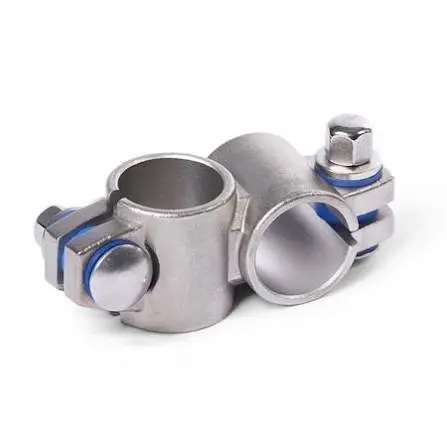
Industrial systems rely on dependable connections to keep equipment, frames, support structures, and mechanical components properly aligned. Whether a manufacturer is building machinery, assembling production equipment, or creating modular workstations, the quality of each connection can influence overall stability and performance. Connecting clamps provide a practical way to join pipes, tubes, and structural components without always requiring permanent methods such as welding.
By offering flexibility, reliable positioning, and straightforward assembly, these components have become valuable in many industrial environments. Understanding the different types of connecting clamps, their benefits, and their applications can help engineers, equipment manufacturers, and maintenance professionals select suitable solutions for their projects.
What Are Connecting Clamps?
Connecting clamps are mechanical components designed to join and secure two or more structural elements. They commonly connect round or square tubes, pipes, and other compatible components to create frames, supports, housings, and modular structures.
Most designs use screws or bolts to apply clamping pressure, holding the connected parts in position. Depending on their configuration, they can create straight connections, right-angle joints, parallel arrangements, or adjustable mounting points.
Unlike some permanent joining methods, many connecting clamps allow components to be removed, repositioned, or reused. This makes them particularly useful in industrial applications where equipment layouts may change over time. Manufacturers offer different configurations for specific connection requirements, including two-way, flanged, swivel, and T-shaped designs. <Cite refs={[“turn869881search4″,”turn869881search1”]}/>
How Connecting Clamps Work
A connecting clamp typically features a shaped body with one or more openings that accommodate compatible tubes or structural components. Fastening screws secure the parts by applying pressure through the clamp body.
The design determines how the components are positioned and supported. Some clamps hold two tubes in parallel alignment, while others connect intersecting sections or attach a tube to a mounting surface.
Selecting a suitable design requires attention to component dimensions, material compatibility, expected loads, environmental conditions, and the intended movement or adjustment of the assembly.
Common Types of Connecting Clamps
Connecting clamps are available in several configurations to support different structural arrangements. Choosing the right type helps create stable connections while keeping installation and future adjustments manageable.
1. Two-Way Connecting Clamps
Two-way clamps connect two compatible tubes or pipes. Depending on their design, they can create straight or angled arrangements.
They are commonly used in modular frames, equipment supports, and tubular assemblies where two structural elements need a secure connection. Their relatively simple configuration also makes them useful for projects that require repeatable assembly.
2. T-Shaped Connecting Clamps
T-shaped clamps connect three structural elements, usually by joining one tube to another at a perpendicular angle. They are useful when a frame needs an additional cross-member or support section.
Manufacturers may use these connectors in shelving systems, protective enclosures, machine frames, and modular structures. Their configuration helps create branching connections without requiring every joint to be permanently fabricated.
3. Flanged Connecting Clamps
Flanged clamps provide a connection between a tube and a mounting surface, plate, or structural base. The flange offers an attachment point that helps position the connected component.
These clamps are useful for equipment supports, mounting structures, and applications where a tubular section needs to connect to a fixed surface.
4. Base Plate Connecting Clamps
Base plate clamps combine a tube connection with a supporting base. They are commonly used when vertical or horizontal structural elements need to be mounted to a machine frame, platform, or other suitable surface.
Their design can simplify the construction of equipment supports, brackets, and modular assemblies.
5. Swivel Connecting Clamps
Swivel clamps allow connected components to be positioned at adjustable angles. This flexibility is valuable in support arms, adjustable fixtures, and structures where the orientation of a component may need to change.
The adjustment range and locking characteristics depend on the specific product design. Users should confirm that the selected model is suitable for the intended application.
Materials Used in Connecting Clamps
Material selection influences a clamp’s durability, weight, corrosion resistance, and suitability for different working environments.
Aluminum: Aluminum connecting clamps are widely used in industrial structures because they combine relatively low weight with useful mechanical strength. They can be suitable for modular frames, equipment supports, and general machine-building applications.
Stainless steel: Stainless steel offers strong corrosion resistance and is often considered for demanding environments, including applications involving moisture or regular cleaning. The appropriate grade depends on exposure conditions and industry requirements.
Technopolymer: Technopolymer clamps can provide lightweight construction, corrosion resistance, and useful thermal insulation properties. They are used in applications where these characteristics are beneficial.
The right material depends on the operating environment, structural requirements, and compatibility with the connected components. <Cite refs={[“turn869881search4″,”turn869881search1”]}/>
Key Benefits of Connecting Clamps in Industrial Systems
Connecting clamps offer several advantages over joining methods that require more extensive fabrication or permanent modifications.
Faster Assembly
Many clamp connections can be assembled using standard fastening components and compatible structural profiles. This can reduce the time needed to construct frames and equipment supports.
Because certain designs avoid the need for drilling or welding the connected tubes, they can also simplify some installation and modification projects.
Flexible System Design
Modular clamp connections make it easier to create different structural arrangements. A manufacturer can often adjust a frame, reposition a support, or add compatible components without rebuilding the entire assembly.
This flexibility is useful in production facilities where equipment layouts and manufacturing requirements change.
Reusability
Many connecting clamps are designed to be detachable. When a structure is modified or replaced, compatible components may be recovered and reused.
This can help reduce material waste and support more adaptable equipment designs. The ability to reuse a connection depends on its condition, specifications, and the requirements of the new application.
Consistent Component Positioning
A properly selected clamp helps maintain the intended relationship between connected tubes or structural sections. Consistent positioning is important when building equipment frames, mounting sensors, or assembling modular support systems.
Reduced Fabrication Requirements
Some clamp-based systems reduce the need for permanent joining operations. This can be especially helpful during prototyping, equipment development, and projects where frequent adjustments are expected.
Industrial Applications of Connecting Clamps
Connecting clamps are used across multiple industries because they support practical and adaptable structural assemblies.
Machine and Equipment Manufacturing
Manufacturers use clamps to assemble machine frames, support structures, protective housings, and equipment fixtures. Their modular design can simplify equipment development and make later modifications easier.
Conveyor and Material Handling Systems
Industrial material handling equipment often includes tubular supports, sensor mounts, and structural frames. Connecting clamps can help join compatible components in these assemblies.
Their suitability depends on the system’s operating loads, vibration conditions, and equipment specifications.
Automation and Robotics
Automation systems frequently require mounting points for sensors, cameras, control components, and support arms. Adjustable clamp connections can help position these elements within a machine or production area.
This flexibility is valuable when engineers need to refine equipment layouts or reposition components during development.
Laboratory and Testing Equipment
Laboratories and research facilities may use modular structures to support instruments, measuring devices, and test equipment. Connecting clamps can help create adjustable arrangements that accommodate different experiments or testing configurations.
Industrial Workstations and Enclosures
Manufacturers also use clamp connectors in workbenches, protective frames, shelving, and equipment enclosures. Their adaptability allows facilities to create structures that suit specific workspace requirements.
How to Choose the Right Connecting Clamps
Selecting a suitable clamp requires evaluating the complete application rather than focusing only on its shape or price.
Check tube dimensions: Confirm that the clamp matches the diameter or profile of the connected components. A compatible fit is essential for reliable positioning.
Evaluate material requirements: Consider moisture, temperature, cleaning conditions, and potential exposure to corrosive substances before choosing aluminum, stainless steel, or technopolymer.
Review the connection configuration: Determine whether the project requires a straight, parallel, T-shaped, flanged, or adjustable connection.
Consider structural demands: Review the manufacturer’s technical information for load capacity, fastening requirements, and other relevant limitations. Do not assume that visually similar clamps have identical performance.
Plan for future adjustments: If the structure may need modification, prioritize compatible modular designs that allow components to be repositioned or replaced.
Best Practices for Reliable Performance
Proper selection and maintenance help connecting clamps perform consistently throughout their service life.
Begin by following the manufacturer’s installation instructions and confirming that all connected components are compatible. Keep fastening elements in suitable condition and inspect assemblies periodically for visible wear, corrosion, or changes in alignment.
In environments with vibration or repeated movement, follow the manufacturer’s recommendations for inspection and maintenance intervals. Any damaged or unsuitable component should be evaluated before the assembly continues in service.
It is also important to document the clamp models and materials used in critical equipment. Keeping accurate records makes replacement and future maintenance easier.
Conclusion
Connecting clamps provide a flexible and practical solution for joining tubes, pipes, and structural components in industrial systems. Their different configurations support applications ranging from machine frames and conveyor structures to automation equipment and modular workstations.
By considering material compatibility, connection geometry, structural requirements, and future maintenance needs, businesses can select clamps that support reliable assemblies. With appropriate product selection and regular inspection, these components can help improve installation efficiency, simplify modifications, and create adaptable industrial structures.