Preschool vs Kindergarten – Which One Is Right for Your Child?
As parents, one of the first big decisions in your child’s educational journey is choosing between preschool vs kindergarten. Although both aim to prepare children for formal schooling, they differ significantly in purpose, structure, and learning outcomes. Understanding these differences will help you make the right decision for your child’s unique needs and development.
Let’s explore what sets preschool apart from kindergarten, and how you can choose the best option for your child.
🌟 What Is Preschool?
Preschool is typically an early learning program for children aged 2 to 5 years. It focuses on nurturing emotional, social, and motor skills through play-based learning.
Key Features of Preschool:
Introduces basic concepts like numbers, letters, and shapes.
Develops communication, sharing, and self-help skills.
Encourages creativity through art, music, and storytelling.
Offers a relaxed structure with plenty of free play.
Preschool programs emphasize a child-centered approach, where exploration, curiosity, and imagination are the core elements of learning.
📘 What Is Kindergarten?
Kindergarten, usually designed for children aged 5 to 6 years, serves as a transitional stage between preschool and formal schooling. It introduces more structured academic learning while continuing to support social and emotional growth.
Key Characteristics of Kindergarten:
Focuses on early literacy and numeracy skills.
Follows a more structured curriculum with schedules.
Encourages independent thinking and problem-solving.
Prepares children for first grade and beyond.
In the comparison of preschool vs kindergarten, kindergarten emphasizes readiness for academic expectations and classroom behavior.
🔍 Preschool vs Kindergarten: Major Differences
When comparing preschool vs kindergarten, several aspects stand out that influence your choice:
| Criteria | Preschool | Kindergarten |
|---|---|---|
| Age Group | 2 to 5 years | 5 to 6 years |
| Curriculum | Play-based learning | Academic-focused learning |
| Structure | Flexible and informal | Structured and scheduled |
| Goals | Socialization, basic concepts | School readiness, literacy, numeracy |
| Assessment | Observation-based | Formal progress tracking |
Understanding these distinctions can make the preschool vs kindergarten decision clearer for parents seeking the best environment for their child.
🎨 Learning Style and Curriculum
In Preschool:
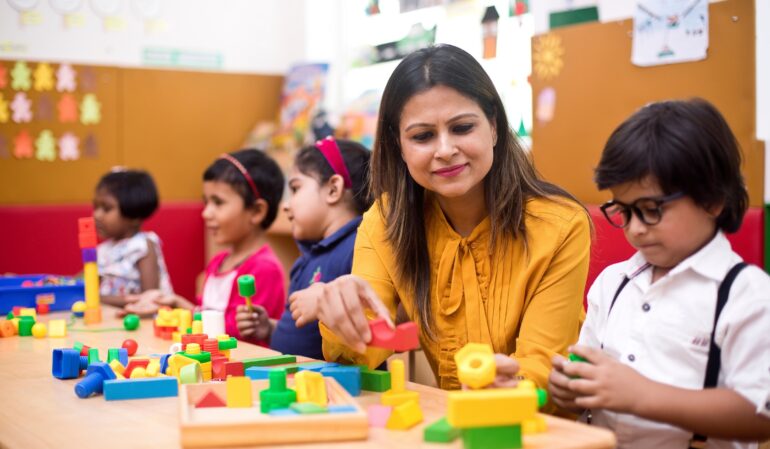
Children learn through exploration. Activities include:
Sand play, block building, and puzzles.
Arts and crafts for fine motor skill development.
Music and rhymes for auditory stimulation.
Story time to improve listening and comprehension.
Preschool helps children develop the foundational skills required for future academic success.
In Kindergarten:
There is a shift to goal-oriented learning, such as:
Recognizing sight words and phonics.
Counting, simple addition and subtraction.
Writing short sentences and reading simple books.
Learning classroom rules and teamwork.
In the debate of preschool vs kindergarten, kindergarten is often the first place where formal academics begin.
🧠 Developmental Benefits
Both preschool and kindergarten offer vital developmental benefits tailored to your child’s age.
Preschool Benefits:
Builds social confidence and independence.
Teaches sharing, empathy, and cooperation.
Develops gross and fine motor skills.
Reduces separation anxiety from parents.
Kindergarten Benefits:
Enhances concentration and self-discipline.
Builds reading and math foundations.
Fosters logical thinking and task completion.
Prepares children for school structure and expectations.
Understanding what each stage offers is crucial when evaluating preschool vs kindergarten for your child.
🧭 How to Decide: Preschool vs Kindergarten
Your child’s age isn’t the only factor in deciding between preschool vs kindergarten. Consider the following:
✅ Choose Preschool If:
Your child is under 5 years old.
They are new to group settings.
You want a gentle introduction to learning.
Your child needs more time to develop social or emotional skills.
✅ Choose Kindergarten If:
Your child is 5 or turning 6 soon.
They are familiar with classroom routines.
They show interest in letters, numbers, and learning.
You feel they are ready for structured education.
Each child is different. Trust your instincts, observe their readiness, and consult with early educators if needed.
🗓️ Typical Daily Routine
To help visualize the difference, here’s what a typical day might look like in each setting.
Preschool Day:
Free play and social interaction
Snack time and outdoor games
Art and craft activity
Circle time with songs and stories
Nap time or quiet play
Kindergarten Day:
Morning meeting and calendar
Reading and writing lessons
Math and science sessions
Group activities and games
Lunch and recess
Homework review and wrap-up
These routines reflect the growing structure and academic expectations that set preschool vs kindergarten apart.
💬 What Educators Say
Educators emphasize that both preschool and kindergarten are critical in building a child’s cognitive, emotional, and physical development. However, the key lies in choosing the right stage based on the child’s growth, not just their age.
In the preschool vs kindergarten comparison, both serve as essential building blocks, not competitors.
📝 Final Thoughts
Choosing between preschool vs kindergarten is a personal decision that depends on your child’s developmental stage, readiness, and prior experience. Preschool lays the groundwork for learning by creating a joyful and playful environment, while kindergarten introduces the structure and academics necessary for future schooling.
Remember:
Preschool nurtures social and emotional growth.
Kindergarten promotes academic confidence and school readiness.
Ultimately, your child’s comfort, happiness, and eagerness to learn should guide your decision. Whether you choose one or both, early education is the first step in helping your child become a confident, curious, and capable learner.