

Common Questions Parents Ask Before Enrolling in Preschool
Choosing the right preschool is one of the first major educational decisions parents make for their child. It’s natural to have questions about admissions, curriculum, safety, teaching methods, and overall readiness before c. After all, the early years lay the foundation for future learning, social skills, and confidence.
If you’re considering enrolling in preschool, this guide answers some of the most common questions parents ask and provides helpful insights to make the decision easier.
Why Is Enrolling in Preschool Important?
Before discussing specific questions, it’s important to understand why enrolling in preschool can be beneficial. Preschool introduces children to structured learning in a fun and supportive environment while encouraging creativity, communication, independence, and problem-solving.
Children who attend quality preschool programs often develop stronger social skills, better classroom readiness, and a positive attitude toward learning.
1. What Is the Right Age for Enrolling in Preschool?
One of the first questions parents ask is about the ideal age for admission.
Most preschools accept children between 2 and 4 years of age, although admission requirements may vary. The best time for enrolling in preschool depends on your child’s emotional readiness, communication skills, and ability to participate in group activities.
Children who display curiosity, participate comfortably in group activities, and understand basic instructions are typically ready to transition into preschool .
2. How to Tell If Your Child Is Ready for Preschool
Every child develops differently, but some common signs of readiness include:
- Interest in exploring new environments
- Basic communication skills
- Ability to stay away from parents for short periods
- Curiosity about books, toys, and activities
- Willingness to interact with other children
Parents should remember that preschool is designed to help children grow, so perfection is not expected before enrollment.
3. What Will My Child Learn in Preschool?
Many parents worry that preschool is only about academics. In reality, early learning focuses on holistic development.
A quality preschool program helps children develop:
- Early literacy and language skills
- Number recognition and counting
- Creative thinking through art and music
- Social interaction and teamwork
- Fine and gross motor skills
- Emotional awareness and independence
Learning is usually activity-based, making education enjoyable and engaging.
4. Is Play-Based Learning Effective?
Yes. Play-based learning is widely recognized as one of the best teaching approaches for young children.
Activities such as puzzles, storytelling, pretend play, music, and building blocks encourage children to think creatively, solve problems, and communicate effectively. This approach keeps children engaged while supporting multiple areas of development.
5. How Long Is a Typical Preschool Day?
The length of the school day varies depending on the program. Many preschools offer sessions ranging from 2 to 4 hours, while some provide extended-day options.
The goal is to maintain a balance between learning, play, rest, and interaction without overwhelming young children.
6. What Should Parents Look for Before Enrolling in Preschool?
Choosing the right preschool requires careful consideration. Parents should evaluate factors such as:
- Safety and hygiene standards
- Qualified and caring teachers
- Age-appropriate curriculum
- Child-friendly classrooms
- Opportunities for play and creativity
- Parent-teacher communication
- Outdoor play areas
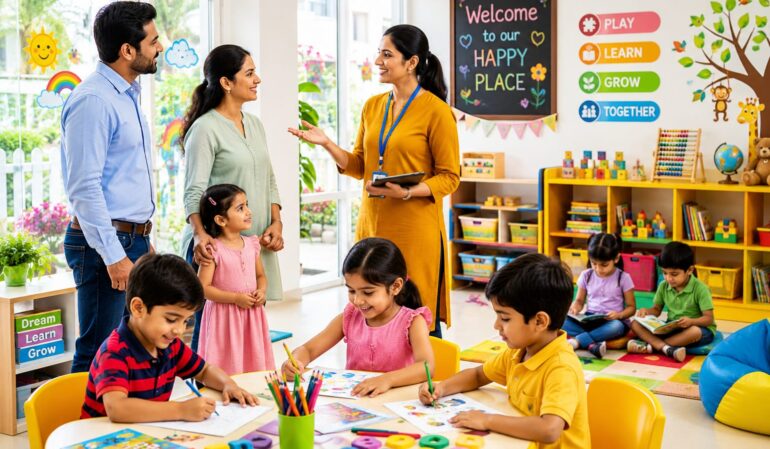
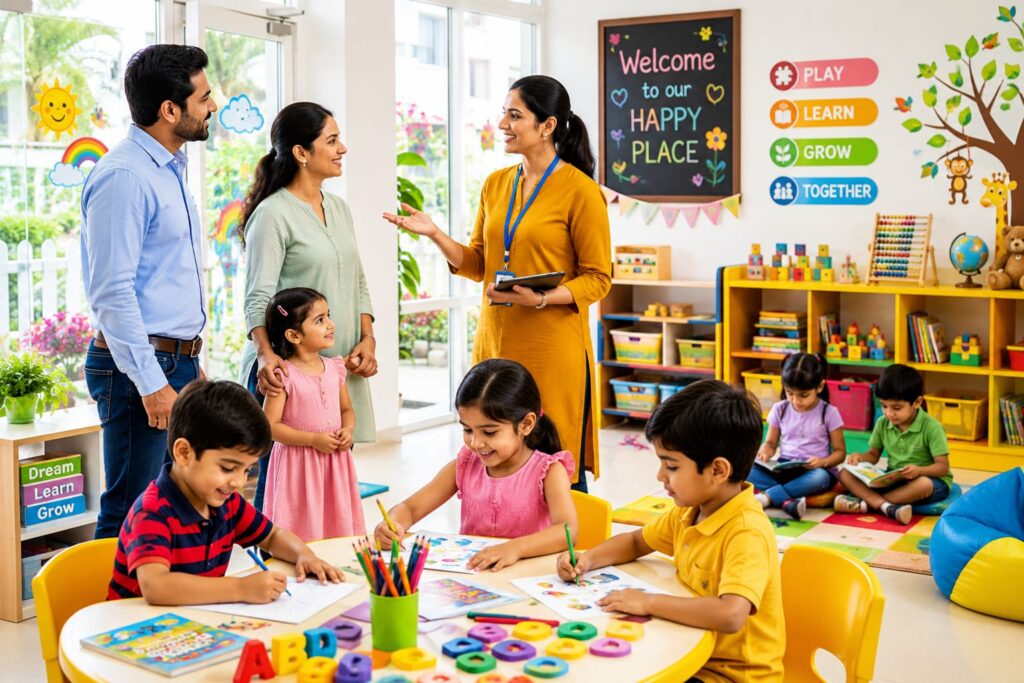
Visiting the campus in person can provide valuable insights into the learning environment.
7. How Important Are Preschool Teachers?
Teachers have a significant influence on a child’s early learning experience. Skilled educators create a welcoming environment, encourage curiosity, and support children’s emotional and social development.
A caring teacher helps children build confidence while guiding them through new experiences and challenges.
8. Will Preschool Help My Child Develop Social Skills?
Absolutely. One of the biggest advantages of enrolling in preschool is the opportunity to interact with peers.
Children learn to:
- Share and cooperate
- Take turns
- Solve simple conflicts
- Respect classroom routines
- Build friendships
These experiences strengthen communication skills and emotional intelligence.
9. How Can Parents Prepare Their Child for Preschool?
Preparation can make the transition smoother. Parents can:
- Read books about starting school
- Encourage independent eating and dressing
- Introduce simple routines
- Arrange playdates with other children
- Speak positively about preschool
Small steps help children feel more comfortable and confident.
10. What Questions Should I Ask During a Preschool Visit?
When visiting a preschool, consider asking:
- What teaching methods do you use?
- How do you ensure child safety?
- What is the daily routine?
- How do teachers communicate with parents?
- How do you support children who need extra attention?
- What activities are included in the curriculum?
These questions can help you evaluate whether the preschool aligns with your expectations.
11. Is It Normal for Children to Feel Nervous?
Yes. Many children experience separation anxiety during the first few days or weeks. This behavior is a common and expected part of the transition to a new learning environment.
Parents can support the transition by maintaining a positive attitude, establishing consistent routines, and reassuring their child that they will return after school.
12. How Does Preschool Prepare Children for Formal School?
Preschool develops habits and skills that make future learning easier. Children become familiar with classroom routines, listening to instructions, participating in group activities, and completing simple tasks independently.
These experiences help build confidence and ease the transition into kindergarten or primary school.
Benefits of Enrolling in Preschool
Some of the long-term benefits include:
- Strong communication skills
- Better social interaction
- Increased confidence and independence
- Improved problem-solving abilities
- Positive learning habits
- Enhanced creativity and imagination
These advantages support both academic success and personal growth.
Tips for Choosing the Right Preschool
To make an informed decision:
- Visit multiple schools before making a choice.
- Observe classroom interactions and facilities.
- Review safety measures and hygiene practices.
- Talk to teachers and school administrators.
- Read reviews and seek recommendations from other parents.
- Consider the location and daily commute.
A preschool that provides a nurturing and stimulating environment can make a meaningful difference in your child’s early years.
Enrolling in preschool is an exciting milestone for both children and parents. Asking the right questions before making a decision can help you choose a learning environment that supports your child’s growth, confidence, and curiosity.
By understanding the curriculum, teaching approach, safety standards, and developmental benefits, parents can feel more confident about enrolling in preschool and giving their child a strong start on the path to lifelong learning. With the right preschool experience, children gain valuable skills that prepare them not only for school but also for future success in life.