

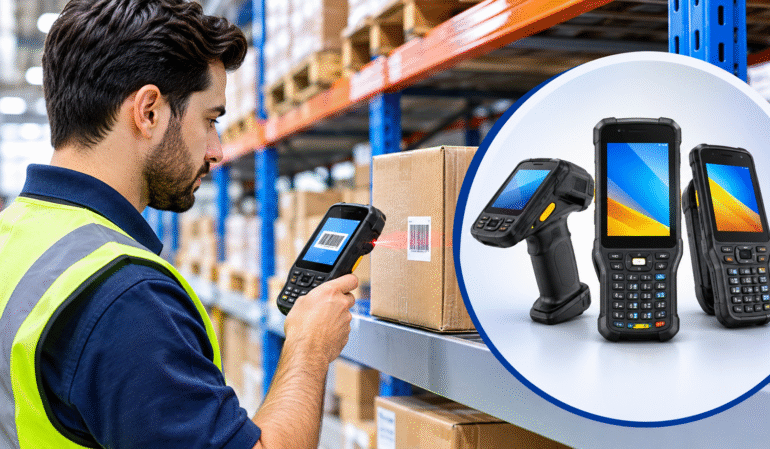
Businesses in warehouses, retail stores, manufacturing facilities, and logistics operations often rely on handheld mobile computers to capture data, scan barcodes, and manage daily workflows. Choosing the right device can improve productivity, support accurate inventory records, and help employees complete tasks more efficiently.
A Zebra handheld mobile computer can combine barcode scanning, mobile computing, and wireless connectivity in one device. However, different models are designed for different environments and workflows. Businesses should evaluate scanning needs, durability, software compatibility, battery performance, and total cost before making a decision.
When comparing options, companies may also research the warehouse barcode pda scanner price kuwait and zebra handheld mobile computer price kuwait to understand purchasing costs and identify equipment that fits their operational requirements.
This guide explains the key factors businesses should consider when selecting a handheld mobile computer.
Table of Contents
- What Is a Zebra Handheld Mobile Computer?
- Identify Your Business Requirements
- Consider Barcode Scanning Capabilities
- Evaluate Durability and Working Environment
- Check Software and Connectivity
- Review Battery Life and Ergonomics
- Compare Total Cost of Ownership
- Common Selection Mistakes
- Frequently Asked Questions
- Conclusion and CTA
1. What Is a Zebra Handheld Mobile Computer?
A handheld mobile computer is a portable device that combines computing capabilities with data capture features. Depending on the model, it may include a barcode scanner, touchscreen, keypad, wireless connectivity, and an operating system that supports business applications.
Zebra handheld mobile computers are used in workflows such as:
- Warehouse receiving and dispatch
- Inventory counting and stock transfers
- Retail price checks and replenishment
- Manufacturing work-in-progress tracking
- Delivery and logistics operations
The exact features vary by model, so businesses should confirm that the selected device supports their required applications and barcode types.
2. Identify Your Business Requirements
Before choosing a device, determine how and where employees will use it.
Define the Main Workflow
Consider whether the device will be used primarily for inventory scanning, order picking, receiving, asset tracking, or field operations. Each workflow may have different requirements for scanning speed, screen size, connectivity, and data entry.
Estimate Daily Usage
A device used for occasional stock checks may have different needs from one used continuously throughout a warehouse shift.
Review:
- Number of daily scans
- Number of users and devices
- Length of operating shifts
- Required scanning distance
- Amount of data entered
- Frequency of device movement
Clearly defining these requirements helps narrow down the available models.
3. Consider Barcode Scanning Capabilities
Barcode scanning is a key factor when selecting a handheld mobile computer.
1D and 2D Barcode Support
Some operations use traditional 1D barcodes, while others rely on 2D formats such as QR codes or Data Matrix. Confirm that the device’s scan engine supports the barcode types used in your business.
Scanning Distance and Barcode Condition
Consider whether employees scan labels at close range or need to read barcodes from a distance. Warehouse labels may also be small, damaged, poorly printed, or placed on different surfaces.
Choose a device suited to the actual scanning conditions rather than relying on general specifications alone.
Scan Trigger and Data Entry
For frequent scanning, a physical trigger may be useful. If employees also enter quantities, notes, or other information, evaluate the keypad, touchscreen, and application interface.
4. Evaluate Durability and Working Environment
The work environment can affect device performance and lifespan.
A warehouse or manufacturing facility may expose devices to dust, repeated handling, accidental drops, or temperature changes. A retail environment may place greater emphasis on comfort, appearance, and ease of use.
Before choosing a model, review:
- Drop and impact specifications
- Dust and moisture protection ratings
- Operating temperature range
- Screen visibility under workplace lighting
- Suitability for gloves, if required
Do not assume every Zebra handheld mobile computer has the same ruggedness. Check the specifications of the exact model and any accessories being considered.
5. Check Software and Connectivity
A handheld device must work with the business systems employees use every day.
Software Compatibility
Confirm that the device supports the warehouse management system (WMS), enterprise resource planning (ERP) platform, inventory application, or other software used by the organization.
Businesses should also check operating system support, security updates, and application requirements before purchasing.
Wireless Connectivity
Depending on the workflow, the device may need Wi-Fi, Bluetooth, or cellular connectivity. Evaluate coverage in storage aisles, loading areas, outdoor locations, and other places where employees will use the device.
If connectivity is interrupted, determine whether the application can store information temporarily and synchronize it later. This capability depends on the software.
6. Review Battery Life and Ergonomics
A handheld computer should support the expected work schedule while remaining comfortable for employees.
Battery Performance
Battery life can vary based on scanning frequency, screen brightness, wireless activity, applications, and battery capacity. Compare manufacturer specifications with the expected daily workload.
For long shifts, consider whether spare batteries, charging stations, or other charging arrangements are available and suitable.
Comfort and Ease of Use
Employees may carry a handheld computer for several hours. Consider:
- Device weight and grip
- Screen size and readability
- Button placement
- Scan-trigger accessibility
- Ease of changing batteries, if applicable
- Compatibility with holsters or other accessories
A practical approach is to test the device with employees who will use it regularly.
7. Compare Total Cost of Ownership
The initial purchase price is only one part of the investment. Businesses comparing the warehouse barcode pda scanner price kuwait and zebra handheld mobile computer price kuwait should also consider the long-term costs.
These may include:
- Charging accessories and spare batteries
- Protective cases or holsters
- Software licensing or integration
- Device management and security
- Repairs and replacement devices
- Employee training
- Technical support
A lower-priced device may not be the most economical choice if it does not support the required workflow or creates additional operating costs.
8. Common Selection Mistakes
Businesses can avoid unnecessary problems by not:
- Choosing a device based only on price
- Overlooking barcode compatibility
- Assuming all models offer the same rugged features
- Ignoring software and operating system requirements
- Underestimating battery needs
- Failing to test devices in the actual work environment
A pilot test with a small group of employees can help identify issues before a larger deployment.
9. Frequently Asked Questions
What is a Zebra handheld mobile computer used for?
It can support business data capture and mobile workflows such as barcode scanning, inventory management, order picking, receiving, retail operations, and logistics.
How do businesses choose the right Zebra handheld mobile computer?
They should evaluate workflow requirements, barcode compatibility, durability, software support, connectivity, battery performance, ergonomics, and total cost of ownership.
Is a handheld mobile computer the same as a barcode PDA scanner?
The terms are often used for similar devices. A handheld mobile computer typically combines barcode scanning with a computing platform and business applications.
What affects Zebra handheld mobile computer prices in Kuwait?
Pricing can vary by model, scanning capabilities, durability, connectivity, accessories, software requirements, and supplier terms. Confirm the exact model and included features when comparing offers.
Should businesses test a device before purchasing?
Yes. Testing in the actual workplace can help confirm scanning performance, comfort, connectivity, and compatibility with existing applications.
10. Conclusion and CTA
Choosing the right Zebra handheld mobile computer starts with understanding the business workflow. Barcode compatibility, durability, software support, connectivity, battery performance, and employee comfort all contribute to a successful deployment.
Businesses should compare models based on their operational requirements and long-term costs rather than focusing only on the purchase price. Testing a device before a wider rollout can also help ensure that it meets the needs of employees and the organization.
Pointus Solutions can be a starting point for businesses exploring barcode scanning and mobile identification products.
Call to Action
Ready to find a handheld mobile computer for your warehouse or business? Contact Pointus Solutions to discuss your requirements and explore suitable barcode identification options. Compare the warehouse barcode pda scanner price kuwait and zebra handheld mobile computer price kuwait while considering the features, compatibility, and support your operation needs.