

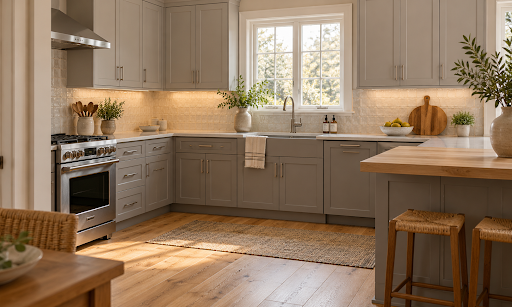
Choosing a cabinet color can change the entire character of a kitchen. Grey is particularly flexible because it can feel soft and understated in a lighter shade or bold and dramatic when a deeper tone is used. It also works with many countertop, backsplash, flooring, and hardware combinations, making it suitable for different design preferences. The challenge is that grey is not simply one color. Different shades can have warm, cool, blue, beige, or other subtle undertones that become more noticeable when placed beside other materials. Homeowners planning a kitchen renovation in Milwaukee can get better results by considering the complete room rather than selecting a cabinet finish in isolation.
Why Grey Works in Different Kitchen Styles
Grey cabinetry can support several interior styles because it sits between stronger colors and traditional neutrals. A pale grey can create a clean and relaxed appearance, while a medium shade can add more definition to the cabinetry. Dark charcoal finishes can make the cabinets a stronger focal point, particularly when paired with lighter countertops and walls. This flexibility also makes grey useful when homeowners are not ready to commit to a very bold cabinet color. It provides more character than plain white while remaining easier to coordinate with other finishes. The final appearance depends on the exact shade, door profile, lighting, and materials surrounding the cabinets.
Understand the Difference Between Light and Dark Grey
Light grey cabinets can help maintain an open feeling, especially in kitchens where natural light is limited. They can also provide a gentle contrast against white walls and light countertops without making the room appear visually heavy. This makes lighter grey a practical choice for smaller or moderately sized kitchens. Medium grey creates a stronger cabinet presence while still working as a neutral foundation. Dark grey and charcoal can provide greater contrast and are often useful when the kitchen has plenty of natural light or when the homeowner wants the cabinetry to become a major design feature.
| Grey Shade | Overall Effect | Works Well With |
| Light grey | Soft and open | White surfaces, light wood, simple tile |
| Medium grey | Balanced and defined | Quartz, stone, neutral backsplashes |
| Charcoal grey | Bold and dramatic | Light countertops, brass, black hardware |
| Warm grey | Comfortable and inviting | Cream, beige, natural wood |
| Blue-grey | Cool and refined | White, brushed metal, soft neutrals |
The table is only a starting point because the same shade can appear different under different lighting conditions. A physical sample should always be viewed beside the materials planned for the actual kitchen.
Pay Attention to Grey Undertones
Undertones are easy to overlook when comparing cabinet samples. A grey with a blue influence can appear cooler, while a grey with beige or brown undertones can feel warmer and softer. These differences can become obvious when the cabinet is placed next to a countertop or backsplash. For example, a cool grey may work naturally with crisp white surfaces and cooler metal finishes. A warmer grey can coordinate better with cream, beige, natural wood, or warmer stone. Comparing the cabinet sample with the other major materials can prevent unwanted color conflicts. Homeowners exploring grey cabinet collections should therefore look beyond the basic color name. The undertone, sheen, door style, and surrounding materials all contribute to the finished appearance.
Consider the Amount of Natural Light
Natural light can significantly affect cabinet color. A light grey may appear almost white when exposed to strong daylight, while a darker grey can look considerably deeper in a room with limited windows. The direction and size of the windows can also change how the finish appears during different parts of the day. Artificial lighting matters just as much in a kitchen that is frequently used during the evening. Warm bulbs can soften certain grey finishes, while cooler lighting may make blue undertones more noticeable. Reviewing samples under both daylight and artificial lighting gives homeowners a more realistic idea of the final result.
Pair Grey With White for Contrast
White is one of the easiest colors to combine with grey because it creates contrast without introducing another strong color. White countertops can brighten darker cabinets, while a white backsplash can provide a clean transition between the upper and lower surfaces. Another option is to use grey lower cabinets with white upper cabinetry. This approach keeps the upper portion of the room light while allowing the lower cabinets to provide more definition. Grey can also be paired with white walls and appliances for a simple, contemporary appearance. Adding wood flooring or warm hardware can prevent the combination from feeling too cool.
Add Warmth With Natural Wood
A kitchen containing several cool surfaces can sometimes feel less inviting. Natural wood is one way to introduce warmth without relying on bright colors. Wood flooring, shelving, furniture, or an island can create a warmer contrast against grey cabinetry. The wood does not necessarily need to match every other wood element in the room. Different but compatible tones can add depth and prevent the kitchen from looking overly coordinated. Warm metal finishes can have a similar effect. Brass or bronze hardware can soften grey cabinetry, while black hardware can create a stronger modern contrast.
Coordinate the Countertop
The countertop should be considered at the same time as the cabinets because the two surfaces occupy a large portion of the visual field. A heavily veined countertop can become the focal point, while simple grey cabinets provide a quieter background. If the countertop is relatively plain, homeowners can allow the cabinet color or door profile to play a larger role. White, cream, light grey, and natural stone surfaces can all work with grey cabinetry. The best combination depends on the undertones and the level of contrast desired.
Choose a Complementary Backsplash
The backsplash should connect the cabinets and countertop without making the kitchen feel overly busy. A simple white tile can provide a clean background, while natural stone can introduce texture and movement. Patterned tile can also work when the cabinet and countertop are relatively restrained. The important point is to decide which material should receive the most visual attention and allow the other surfaces to support it.
Select a Cabinet Door Profile
Color is only one part of cabinet design. The door profile can completely change how a grey finish feels within the room. A flat-panel door can give grey cabinetry a streamlined appearance. Shaker doors can make the same color feel more transitional, while raised or recessed profiles can create a more traditional direction. This is why homeowners should evaluate color and door style together. A grey finish that looks modern in one profile may appear much more traditional in another.
Consider Hardware and Metal Finishes
Hardware can provide the finishing detail that connects the cabinets with the rest of the kitchen. Black pulls create strong contrast, while brushed nickel can provide a more subtle appearance. Brass can add warmth and become an attractive accent against medium or dark grey cabinetry. The size and shape of the hardware matter as well. Long pulls can emphasize horizontal lines, while smaller knobs can create a more traditional appearance. Hardware should also be comfortable to grip because it is used repeatedly throughout the day.
Use Grey in a Two-Tone Kitchen
Grey does not have to cover every cabinet in the room. It can be used selectively to create visual separation between the island and perimeter cabinetry. For example, grey lower cabinets can be paired with lighter upper cabinets, or a darker grey island can become the central focal point while the surrounding cabinets remain neutral. Natural wood can also be introduced as a second finish. The countertop can connect the different cabinet colors and help the combination feel intentional rather than random.
Think About Flooring
Flooring can either reinforce or balance the cabinet color. Light wood can add warmth to a grey kitchen, while light tile can create a brighter overall appearance. Dark flooring can also work, but it may increase the visual weight of the room. In that case, lighter walls, countertops, or backsplashes can help maintain balance. It is useful to compare cabinet and flooring samples together because undertones that seem subtle on their own can become more noticeable when the two materials are placed side by side.
Look at Current Color Directions
Homeowners researching cabinet color for kitchen may notice continued interest in soft neutrals, natural wood, two-tone combinations, and grey used alongside warmer materials. These ideas can provide inspiration without requiring homeowners to follow a trend exactly. A kitchen should still reflect the home’s architecture and the homeowner’s preferences. A flexible color that works with several materials can remain useful even when surrounding design trends change.
Consider Maintenance and Daily Use
Cabinet appearance should also be evaluated from a practical perspective. Kitchens are exposed to fingerprints, cooking residue, moisture, and regular handling, so the finish should be appropriate for the level of cleaning the household expects. Door detailing can also influence maintenance. More intricate profiles may require additional attention around grooves and edges, while smoother surfaces can be simpler to wipe down. Following the manufacturer’s cleaning recommendations is important regardless of the selected color or finish.
Review Physical Samples Before Ordering
Online images are useful for narrowing down choices, but they cannot completely reproduce the appearance of a cabinet finish in a real kitchen. Place the sample beside the countertop, backsplash, flooring, and hardware. View the combination during daylight and again under the kitchen’s artificial lighting to see how the colors interact. This extra step can help homeowners identify undertones and contrast levels before the cabinets are ordered.
Final Thoughts
Grey cabinetry offers a flexible way to add color without committing to an overly strong palette. The right result depends on choosing the appropriate shade and coordinating it with the door profile, lighting, countertop, backsplash, flooring, and hardware. For homeowners in Milwaukee, evaluating the entire material palette before making a final decision can make it easier to create a kitchen that feels balanced and suited to the home.