

How Parents Can Make Their Child’s First Preschool Experience Easier
A child’s first experience at school is a significant step in their growing-up journey. It introduces them to a world beyond home, where they meet new people, discover different activities, and begin developing skills that support their future learning. While this change can be exciting, some children may feel uncertain about leaving their parents or spending time in an unfamiliar place.
Parents can make this transition more comfortable by introducing small changes at home and helping their child understand what school will be like. A little preparation, consistent encouragement, and a positive attitude can help children approach this new experience with greater confidence.
Preschool provides children with opportunities to explore their interests, interact with classmates, develop independence, and become familiar with early learning activities. Preparing them emotionally and practically can help make the beginning of this journey more enjoyable.
Why Should Parents Prepare Children Before School Starts?
For a young child, starting school may involve several new experiences at once. They must become familiar with different people, follow classroom routines, participate in group activities, and spend some time away from their usual caregivers.
Preparing children gradually can help them become more comfortable with these changes. Preschool
Some important benefits include:
- Greater confidence in unfamiliar surroundings
- Improved comfort when meeting new people
- Better understanding of simple routines
- Opportunities to practise independence
- Increased willingness to communicate needs
- More confidence during group activities
- A positive attitude toward learning
The purpose of preparation is not to make children completely fearless. It is to give them the reassurance and skills they need to manage unfamiliar situations with support.
1. Introduce School as an Exciting New Experience
Children often look to their parents to understand how they should feel about something unfamiliar. When parents talk about school in an encouraging way, children may feel more curious and excited to explore the new experience.
Explain that they will have opportunities to listen to stories, explore toys, create artwork, sing songs, play games, and meet other children.
You might say:
- “You’ll get to enjoy many fun and exciting activities at school.”
- “Your teacher will help you whenever you need support.” Preschool
- “You can play and learn alongside other children.”
- “After school, we will meet again.”
Keep your explanations simple and realistic. Avoid using school as a punishment or promising things that may not happen. The aim is to help your child develop a reassuring and positive understanding of school life.
2. Build a Comfortable Morning and Bedtime Schedule
A predictable daily schedule can make new experiences easier for young children. When they know what usually happens next, they may feel more settled and prepared.
A few weeks before preschool begins, help your child get used to a consistent daily routine that includes waking up, having breakfast, getting dressed, enjoying playtime, and going to bed on time.
You can also practise a simple morning sequence:
- Wake up and get ready.
- Wash and dress.
- Eat breakfast.
- Pack the school bag.
- Leave for school at the planned time. Preschool
Introduce these changes gradually so that your child has time to adjust. A consistent bedtime is also helpful because sufficient sleep supports mood, energy, and participation in daily activities.
3. Let Children Practise Everyday Responsibilities
Children often gain confidence when they are given opportunities to complete small tasks independently.
At home, encourage your child to practise activities appropriate for their age, such as:
- Returning toys to their storage place
- Keeping their belongings together
- Washing their hands
- Eating with suitable utensils
- Carrying a small bag
- Putting on simple clothing with assistance when necessary
- Asking for help when they need it
These everyday experiences can help children become more comfortable managing personal tasks during the school day.
Be patient when your child struggles. Demonstrate how to do the task, provide help when necessary, and gradually let your child try it independently. Remember, learning and improvement matter more than getting everything perfect. Preschool
4. Create Opportunities to Play With Other Children
Group activities are an important part of early learning. Children may need time to become familiar with sharing, taking turns, listening, and cooperating with others.
Parents can introduce these experiences through playground visits, playdates, family gatherings, and simple games with other children. Preschool
Encourage your child to practise:
- Asking to join a game
- Sharing toys with guidance
- Waiting for a turn
- Listening to another person’s ideas
- Expressing needs politely
- Playing cooperatively
- Resolving small disagreements with adult support
These interactions allow children to practise social behaviour in familiar surroundings before experiencing similar situations at school.
5. Use Picture Books to Explain School Life
Reading stories can introduce young children to new situations and help them understand what to expect from unfamiliar experiences. . Books about starting school can introduce familiar situations, such as meeting a teacher, making friends, participating in activities, and saying goodbye to parents.
While reading together, discuss the pictures and ask questions such as: Preschool
- “What do you think is happening here?”
- “How might this child feel?”
- “What would you like to try at school?”
- “Who could you ask if you need help?”
Allow your child enough time to express their thoughts and respond in their own words. These conversations can reveal their expectations and provide opportunities to discuss any concerns they may have.
6. Practise Following Simple Directions
Children gradually learn to understand instructions through everyday experiences. You can support this ability through playful activities rather than formal lessons.
For example, ask your child to put a toy in a basket, bring a favourite book, or follow the actions in a song.
Other useful activities include:
- Playing simple instruction-based games
- Sorting toys by colour
- Completing age-appropriate puzzles
- Following short action sequences
- Putting materials away after an activity
Use clear, manageable instructions and give your child enough time to respond. These experiences can help them become more comfortable participating in teacher-guided activities. Preschool
7. Make Learning Part of Everyday Play
Children do not need to complete advanced academic work before entering school. Everyday play offers many opportunities to explore concepts, develop coordination, and build curiosity.
Try these simple activities at home:
Reading together: Explore picture books and talk about the illustrations.
Counting objects: Count toys, fruits, or household items during everyday activities.
Drawing and colouring: Offer suitable art materials and let children express their ideas.
Sorting games: Group objects by shape, colour, or size.
Music and movement: Sing songs, clap rhythms, and imitate simple actions.
Building with blocks: Encourage children to construct towers, bridges, or imaginative structures.
These activities help children discover that learning can happen naturally through exploration and play.
8. Familiarise Your Child With the School Environment
If the school permits a visit before classes begin, take your child along. Seeing the classroom, meeting the teacher, and exploring the surroundings may make the first day feel less unfamiliar.
During the visit, point out interesting books, toys, learning corners, and play areas. participate immediately.
Give your child time to explore their surroundings and become comfortable before encouraging them to join in. Preschool
You can also explain the arrival and pickup routine so they understand what will happen when they attend.
A familiar face or environment may help some children feel more comfortable, although each child responds differently to new situations.
9. Respond Gently to Worries About Separation
Some children become upset when their parents leave, especially during the first few days of school. They may cry, cling to a parent, or repeatedly ask when they will return.
These reactions can occur while children adjust to a new routine.
Parents can support the transition by:
- Remaining calm and reassuring
- Following the school’s drop-off instructions
- Keeping goodbye routines brief and predictable
- Explaining that they will return after school
- Avoiding leaving without saying goodbye
- Allowing teachers to help the child settle
- Providing reassurance without dismissing feelings Preschool
You could say, “I know you want me to stay with you.” Your teacher will help you, and I will come back to pick you up.”
If distress continues or significantly affects the child’s everyday life, discuss it with the teacher and seek appropriate professional guidance when needed.
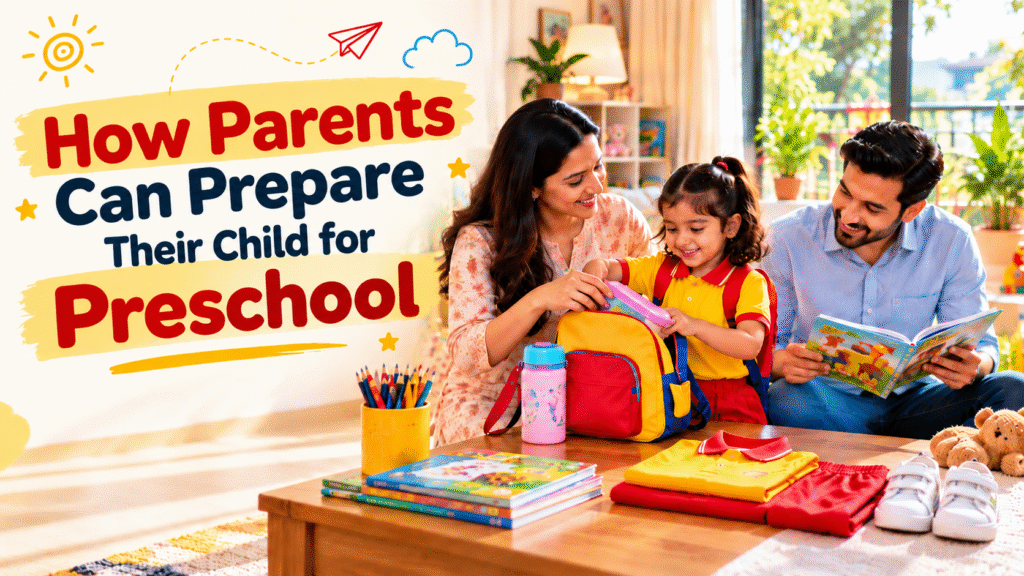
10. Make Packing the School Bag a Shared Activity
Preparing school belongings together can help children become familiar with their upcoming routine.
Depending on the school’s instructions, allow your child to help organise items such as:
- A school bag
- A water bottle
- A lunchbox
- A change of clothes, if required
- Necessary stationery or other approved supplies
Show your child where each item belongs and let them practise carrying the bag.
Follow the school’s list of required items rather than packing unnecessary toys or belongings. Involving Involving your child in these activities can help them feel valued and encourage a sense of responsibility. Preschool
11. Give Children Space to Talk About Their Feelings
Children may experience a mixture of excitement, curiosity, nervousness, and uncertainty before starting school. Some can explain their emotions clearly, while others may communicate them through behaviour.
Create a comfortable space for conversation by asking your child simple, thoughtful questions like:
- “What are you looking forward to?”
- “Is anything making you feel worried?”
- “What would help you feel more comfortable?”
- “What would you like to know about school?”
Listen carefully and avoid criticising or dismissing their concerns. If a child feels nervous, acknowledge the emotion and explain how you and their teacher can support them.
Learning to communicate feelings can help children ask for assistance when they need it.
12. Maintain Regular Communication With Teachers
Parents and educators can work together to support a child’s adjustment. Before classes begin, share relevant information about your child’s routines, interests, communication preferences, and any concerns that may affect the transition.
Ask the school about its settling-in arrangements, daily schedule, drop-off procedure, and methods for communicating with families.
If the school offers a gradual introduction, follow its guidance on how this process works. Regular communication can help parents understand how their child is responding to the new environment and allow teachers to provide appropriate support.
Mistakes to Avoid During Preschool Preparation
While preparing children for school, it is important to keep expectations realistic. Preschool
Avoid:
- Pressuring children to master advanced reading or writing beforehand
- Comparing them with siblings or classmates
- Describing school as frightening or unpleasant
- Changing every part of their routine suddenly
- Forcing social interaction when they feel overwhelmed
- Ignoring their worries
- Expecting them to adjust immediately
- Making promises that cannot be guaranteed
Instead, focus on encouragement, patience, familiar routines, and opportunities to practise everyday skills. A calm approach can help children feel supported as they adapt.
Frequently Asked Questions
When should parents begin preparing a child for preschool?
Families can start introducing school-related routines and conversations a few weeks before the start date. The timing depends on the child and the school’s arrangements. Gradual preparation is often easier than introducing several changes at once. Preschool
What skills should children have before starting school?
Children do not need to know the full academic curriculum before admission. Useful foundations include communicating basic needs, participating in simple routines, exploring activities, interacting with others, and practising age-appropriate self-help tasks.
What should parents do if their child cries at drop-off?
Remain reassuring, follow the school’s guidance, and allow the teacher to help your child settle. Some children need more time to become comfortable. If distress continues or becomes severe, discuss the situation with the school and consider appropriate professional advice. Preschool
How can parents make the first school day more comfortable?
Prepare belongings beforehand, follow a familiar morning routine, arrive according to the school’s instructions, offer reassurance, and say goodbye calmly. Avoid rushing or putting pressure on your child to behave in a particular way.
Should children know letters and numbers before preschool?
Early exposure to letters and numbers can be enjoyable, but children do not necessarily need to master them before admission. Stories, conversations, games, movement, and creative exploration are also valuable parts of early learning.
A child’s transition into school involves much more than preparing uniforms and school supplies. Children also need opportunities to become familiar with routines, meet new people, express their emotions, and practise managing small responsibilities.
Parents can make this process easier by maintaining predictable schedules, encouraging independence, introducing social activities, reading stories, and communicating with teachers.
Preschool should be a welcoming introduction to learning rather than a source of pressure. Every child adjusts differently, so patience, reassurance, and realistic expectations are essential.
With thoughtful preparation and consistent support, parents can help their children approach their first school experience with greater confidence, curiosity, and comfort. Preschool