

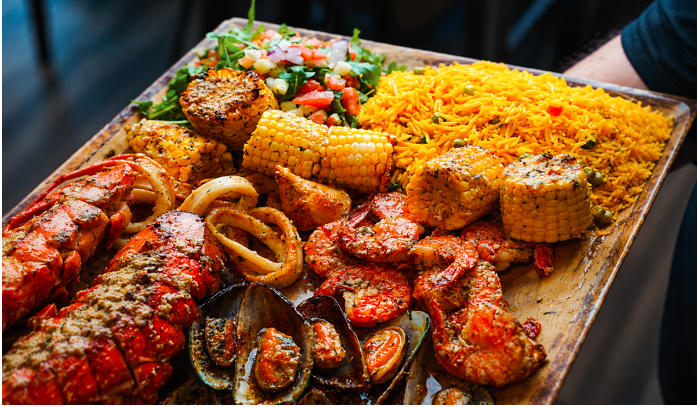
If you’ve never sat down in front of a table covered in shrimp, crab legs, corn, and sausage all swimming in garlic butter, the first question is usually the same: where do you even start? Learning how to eat a seafood boil isn’t complicated, but it does help to know a few basics before you dig in how to peel, when to use your hands versus a tool, and what order actually makes the meal easier instead of messier.
A seafood boil is meant to be eaten with your hands. That’s not a shortcut or something people do when nobody’s watching it’s the standard, expected way to enjoy the meal. Shellfish shells and legs aren’t built for forks and knives, so once you accept that this is a hands-on meal, everything else falls into place.
What’s Usually in a Seafood Boil
Before getting into technique, it helps to know what’s typically on the table. A classic boil usually includes a mix of:
- Shrimp — often cooked shell-on for extra flavor, sometimes deveined beforehand
- Crab legs — snow crab, king crab, or Dungeness, depending on availability
- Sausage — usually andouille or kielbasa, sliced into rounds
- Corn on the cob — cut into smaller pieces so it cooks evenly and is easy to grab
- Potatoes — small, waxy potatoes that hold their shape after boiling
- Sometimes mussels, clams, crawfish, or lobster tail, depending on the boil
Everything is typically cooked together in a seasoned broth, then drained and tossed or served with a butter-based sauce. Because the ingredients vary by shell type and size, it makes sense to eat them in a rough order starting with what’s easiest and working up to what takes more effort.
Getting Set Up Before You Start
A little prep goes a long way with a boil. You don’t need much, but having the right setup makes the meal smoother:
- Napkins or wet wipes plenty of them
- A bib or a shirt you don’t mind getting sauce on this is genuinely a messy meal
- A discard bowl or plate for shells
- A small bowl of water with lemon if one isn’t provided, for rinsing fingers between courses
- Crab crackers or kitchen shears, if the shells haven’t already been scored before serving
Most boils are served on butcher paper or a tray rather than individual plates, which is intentional it keeps cleanup simple and reinforces that this isn’t a fork-and-knife kind of meal.
Start With the Easy Wins: Corn, Potatoes, and Sausage
It’s worth eating the simplest items first while your hands are still clean and dry. Corn on the cob can be eaten straight off the piece, and the potatoes and sausage need no shelling or cracking at all just pick them up and go. Starting here also lets you get a feel for the seasoning and sauce before moving on to items that take more effort to eat.
How to Peel Shrimp
Shrimp is usually the easiest seafood on the table to work through, especially once you get a rhythm going.
- Twist off the head if it’s still attached, and set it aside in your discard bowl.
- Peel from the underside, where the legs are, working the shell away from the body in one motion. The shell usually comes off in one or two pieces if the shrimp isn’t overcooked.
- Leave the tail on or pull it off — either works. Some people keep the tail as a handle for dipping in sauce.
- If the shrimp was cooked shell-on and hasn’t been deveined, you may see a dark line along the back. It’s the digestive tract, and while it’s safe to eat, most people prefer to remove it by running a small paring knife or your thumbnail along the back and pulling it out.
Shell-on shrimp tends to hold more flavor from the boil, which is why many boils are served this way rather than pre-peeled.
Cracking Crab Legs
Crab legs intimidate a lot of first-timers, but the process is straightforward once you’ve done it once or twice.
- Twist the leg at the joint to separate it from the body or from other leg segments this often loosens the shell enough to make cracking easier.
- Use a crab cracker or the back of a knife to gently crack the shell along its length. Crack the sides rather than pressing straight down on the meat, so you don’t crush it.
- Pull the shell apart and slide the meat out in one piece where possible. A seafood fork or pick helps get meat out of narrower sections near the joints.
- For the claws, a firm but controlled crack at the pincer usually splits the shell cleanly enough to pull the meat out whole.
If the crab legs were pre-scored or slightly cracked before serving a common practice that lets the seasoned broth flavor the meat during cooking you may be able to skip the cracker and simply pull the shell open by hand.
Eating Mussels, Clams, and Lobster Tail (If They’re Included)
Not every boil includes these, but if yours does:
- Mussels and clams open on their own during cooking. Use the empty half of one shell as a small tool to scoop the meat out of the next, or just pull the meat out with your fingers and discard the shell.
- Lobster tail is usually the most prized item. Use kitchen shears or your fingers to split the underside of the shell, then pull the tail meat out in one piece. It can be dipped whole or cut into bite-sized pieces.
Don’t Skip the Sauce
The butter or Cajun-style sauce poured over a boil isn’t just for flavor it’s part of how the meal is meant to be eaten. Dip shrimp, crab meat, and sausage directly into it, and don’t be shy about spooning extra sauce over corn and potatoes as you go. If multiple sauces are offered, it’s worth trying a piece of shrimp or crab in each before deciding which one you prefer for the rest of the meal.
A Few Practical Tips
- Eat in order of ease. Start with corn, potatoes, and sausage, move to shrimp, then tackle crab legs last, since they take the most hand strength and technique.
- Keep your discard bowl close. Shells and heads pile up fast, and having a dedicated spot for them keeps the table manageable.
- Pace yourself. A boil is meant to be a slower, communal meal rushing through it usually just means more mess and less flavor.
- Ask before adding more spice. If you’re sharing a table, not everyone has the same heat tolerance, so it’s considerate to check before dumping extra seasoning over a shared spread.
- Wash your hands properly afterward. Butter and seasoning cling to skin more than people expect a quick rinse with lemon water helps, but a full hand wash after the meal is worth it.
Final Thoughts
Eating a seafood boil is less about following strict rules and more about knowing the basic order of operations start easy, work up to the shells that need cracking, use your hands without hesitation, and lean into the mess rather than fighting it. Once you’ve peeled your first shrimp and cracked your first crab leg, the rest of the table stops feeling intimidating and starts feeling like exactly what it’s meant to be: a fun, hands-on meal best shared with other people.
If you’re in the mood for one without the cleanup of cooking it yourself, Hai puts together a full seafood boil spread with shrimp, crab, sausage, corn, and potatoes tossed in a seasoned butter sauce ready to dig into as soon as it hits the table.
FAQs
Do I really need to eat a seafood boil with my hands?
Yes. Shells and legs don’t work well with forks and knives, and eating with your hands is the standard, expected approach most boils are served on butcher paper or trays specifically because of this.
What’s the dark line on the back of the shrimp is it safe to eat?
It’s the shrimp’s digestive tract. It’s safe to eat, but many people remove it for texture and appearance rather than any safety concern.
What sauce goes best with a seafood boil?
Garlic butter is the most common choice, but lemon pepper and Cajun-spiced butter are popular alternatives. If more than one option is available, it’s worth trying a bite of shrimp or crab in each before settling on a favorite for the rest of the meal.
In what order should I eat the different items in a boil?
Starting with corn, potatoes, and sausage is easiest since they need no peeling or cracking. Move on to shrimp next, and save crab legs for last since they take the most effort to work through.
Where can I get a seafood boil in Mississauga?
If you’re in Mississauga, Ontario, Hai serves a full seafood boil with shrimp, crab legs, sausage, corn, and potatoes tossed in a seasoned butter sauce, so you can put this guide to use without any of the cooking or prep.