Preschool : The First Step Toward a Bright and Confident Future
Every parent dreams of giving their child the strongest start in life—and the journey often preschool begins with . These early years form the foundation for a child’s social skills, emotional growth, confidence, communication, and natural curiosity. Today’s parents are more aware than ever of how important the right early environment is, and that’s exactly where a good makes all the difference.
In this blog, let’s explore why preschool matters, what children learn, how it builds future readiness, and how parents can choose the perfect one.
Why Preschool Matters in Your Child’s Early Development
Preschool is much more than just a place where children play for a few hours. It is a carefully designed environment where learning happens naturally through exploration, interaction, and structured activities.
During the ages of 2 to 6, children experience rapid brain development. Research shows that 90% of a child’s brain develops before age 5, making the ideal phase to shape essential skills.
Key Benefits of Preschool
- Builds social and emotional skills
- Improves language and communication
- Strengthens cognitive development
- Encourages creativity and imagination
- Helps children adapt to routine and structure
- Makes the transition to formal schooling smoother
When children attend , they interact with peers, share, express themselves, and learn how to follow instructions—all of which are necessary for future success.
What Children Learn in Preschool
A quality preschool blends play with learning, helping children understand the world around them in a joyful, pressure-free way.
1. Social & Emotional Development
Helps children learn:
- Sharing and cooperation
- Managing emotions
- Understanding empathy
- Building friendships
These skills help shape a child’s personality and confidence.
2. Communication & Language
Children expand vocabulary through:
- Storytelling
- Songs and rhymes
- Conversations with peers and teachers
- Picture books and interactive sessions
Follow a language-rich curriculum to strengthen speaking and listening skills.
3. Cognitive Development
Activities like puzzles, matching games, sorting objects, and role-play scenes help in:
- Problem-solving
- Memory improvement
- Decision-making
- Logical thinking
These experiences spark curiosity and encourage children to ask questions and explore.
4. Motor Skill Development
Activities support both fine and gross motor skills, such as:
- Coloring, drawing, and craft
- Clay molding
- Running, jumping, and balancing
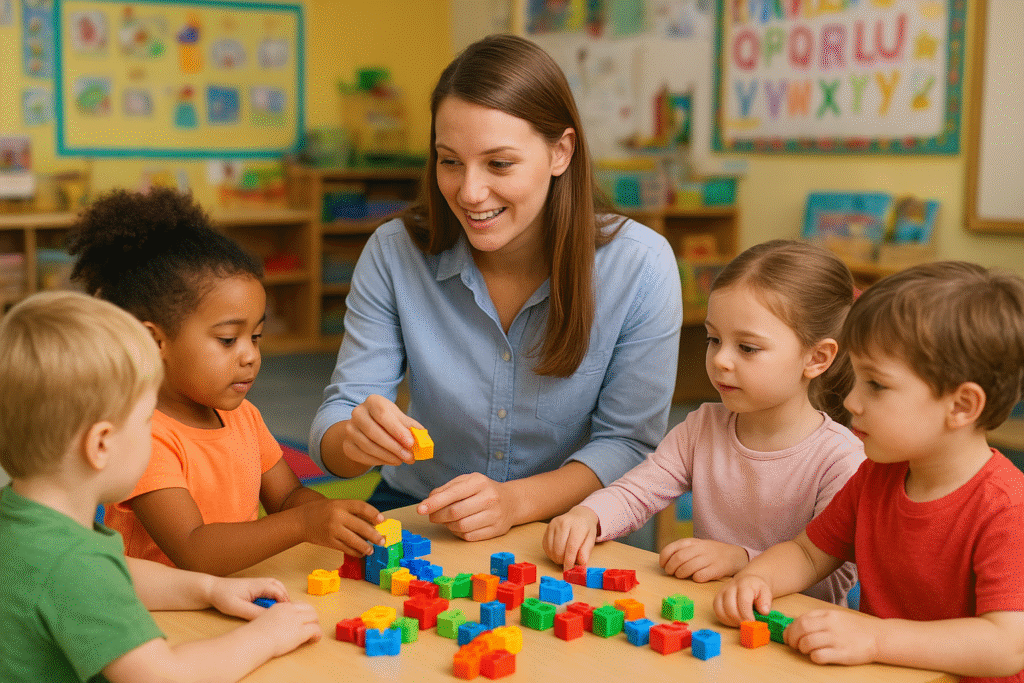
- Building blocks and threading beads
These help children become more physically independent and confident.
5. Early Academic Readiness
While academics are not the primary focus, children are introduced to:
- Letters and phonics
- Numbers and counting
- Shapes and colors
- Basic science concepts
The goal is not memorization but recognition and understanding through fun activities.
The Role of Play in Preschool Learning
Play is the heart of the experience. It is not just fun—it is purposeful.
Why Play-Based Learning Works
- Children learn faster when they enjoy the activity
- It supports emotional flexibility
- Encourages imagination and creativity
- Helps children express feelings
- Strengthens motor and problem-solving skills
Play-based learning makes a joyful space where children love to return every day.
How Preschool Prepares Children for School
One of the biggest advantages of preschool is how smoothly it transitions children into formal schooling.
1. Structured Routines
Children learn:
- Classroom rules
- Following schedules
- Sitting for activities
- Taking turns
These routines build discipline and independence.
2. Confidence & Communication
Kids who attend preschool generally become:
- More confident
- Better communicators
- More adaptable
- More willing to socialize
This confidence plays a huge role when they enter kindergarten.
3. Academic Readiness
Introduces foundational concepts through a playful approach, making the child mentally prepared for school-level learning.
How to Choose the Right Preschool for Your Child
Selecting a preschool is an important decision for every parent. Here’s what you should consider:
1. Teaching Philosophy
Different preschools follow different approaches:
- Play-based
- Montessori
- Activity-based
- Blended methods
Choose what aligns best with your child’s personality.
2. Safety & Cleanliness
A good preschool must have:
- CCTV supervision
- Hygienic classrooms
- Childproof furniture
- Secure entry and exit
Safety should always be the top priority.
3. Teacher-to-Child Ratio
Smaller groups ensure:
- Individual attention
- Better communication
- Stronger bonding
- Better learning outcomes
A ratio of 1:10 or lower is ideal for preschoolers.
4. Curriculum & Activities
Look for that offer:
- Art & craft
- Storytelling
- Music & dance
- Outdoor play
- Sensory activities
A balanced curriculum creates overall development.
5. Parent Involvement
Preschools that involve parents through:
- Events
- Workshops
- Feedback sessions
…tend to create a stronger learning ecosystem.
6. Location & Accessibility
The preschool should be close to home, ensuring:
- Easy travel
- Less stress for the child
- More convenience for parents
Why the Right Preschool Makes a Lasting Difference
A strong experience does more than prepare children for school—it shapes their personality, social behavior, emotional strength, and love for learning.
Long-Term Benefits
- Better academic performance
- Stronger communication skills
- Higher confidence
- Improved emotional control
- Enhanced creativity
- Lifelong curiosity
Children who attend often display stronger problem-solving abilities and better adaptability as they grow.
Preschool Is the First Big Step Toward Future Success
Choosing the right preschool is one of the most meaningful decisions you can make for your child. It sets the foundation for learning, emotional well-being, discipline, and social confidence. A great helps children explore, imagine, question, and express themselves freely—skills that influence their entire educational journey.
With the right environment, your child will not just learn—they will thrive, grow, and build a strong foundation for a bright future.