Preschool Education in Nagpur: Key Skills Your Child Will Learn Early
Choosing an early learning environment is an important step for every parent. The preschool years give children their first structured opportunities to explore the world, interact with others, develop confidence, and build essential learning habits.
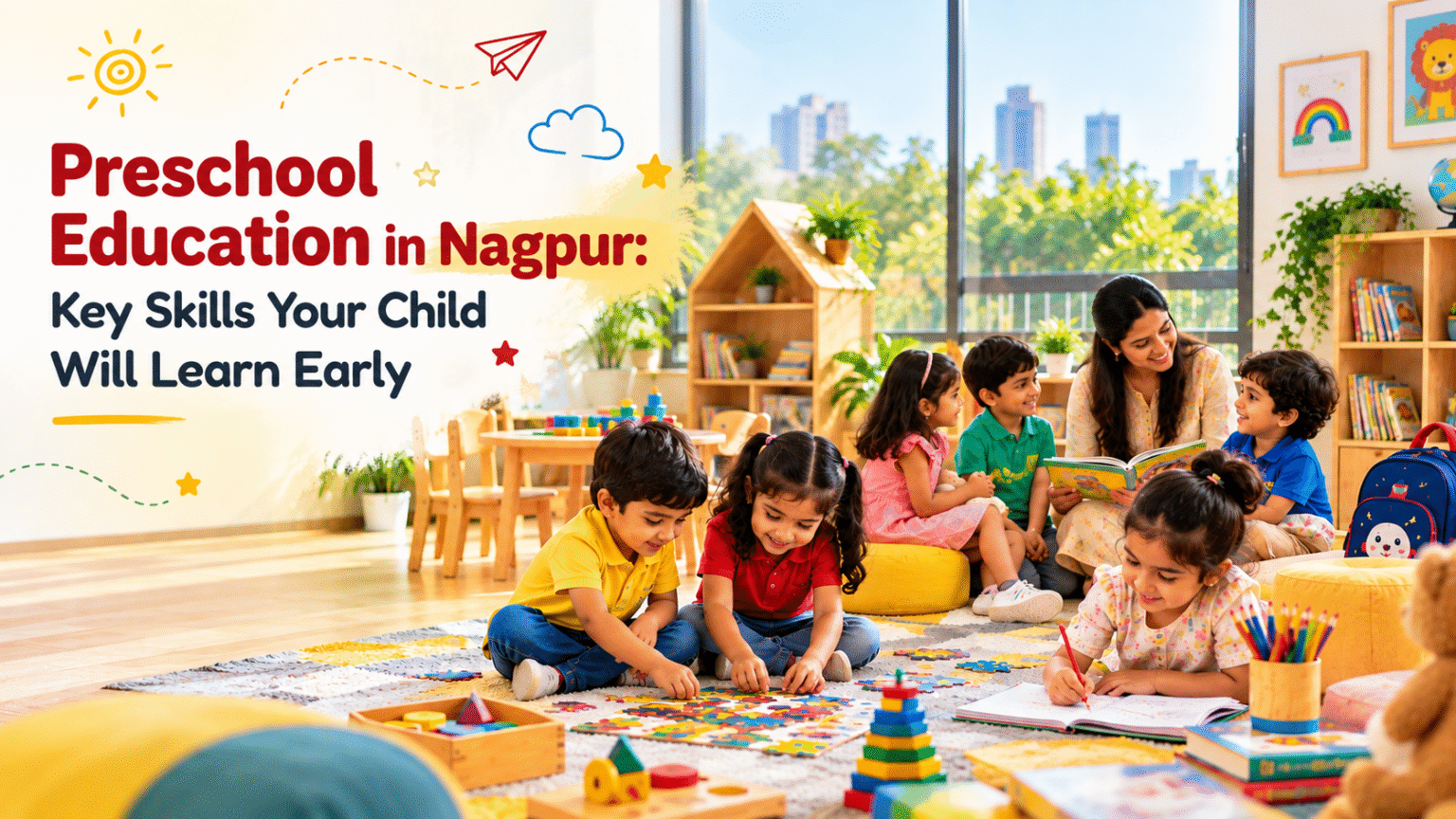
For families looking into Preschool Education in Nagpur, it is helpful to understand that early education involves much more than learning alphabets and numbers. Children learn through stories, games, conversations, creative activities, movement, group experiences, and hands-on exploration.
These everyday experiences can help children develop communication, social, emotional, physical, creative, and thinking skills that support their future education.
What Does Preschool Education Include?
Preschool education is an early learning stage designed for young children before they enter primary school. Instead of concentrating only on formal academics, it introduces Preschool Education in Nagpur, children to learning through age-appropriate experiences.
A typical early learning environment may include:
- Storytelling and picture books
- Rhymes and songs
- Art and craft
- Building and construction activities
- Number and shape games
- Group discussions
- Outdoor play
- Role-play
- Puzzles and matching activities
- Simple classroom routines
The purpose of Preschool Education in Nagpur is to give children a comfortable environment where they can learn at their own pace while developing curiosity and confidence.
Early education should create a foundation for future learning rather than place unnecessary academic pressure on young children.
Why Are Early Learning Skills Important?
Young children learn continuously through observation, interaction, experimentation, questions, and play. Their early experiences can influence how they approach new activities and learning situations.
A balanced preschool program can support the development of:
- Communication
- Early literacy
- Basic numeracy
- Social interaction
- Emotional awareness
- Fine motor coordination
- Gross motor development
- Creativity
- Problem-solving
- Independence
- Listening and concentration
Parents exploring Preschool Education in Nagpur should therefore consider the complete learning experience rather than focusing only on worksheets or academic lessons.
1. Communication and Language Development
Communication is one of the first skills children begin strengthening in an early learning environment.
Through regular conversations with teachers and classmates, children get opportunities to express their thoughts, describe experiences, ask questions, and listen to others.
Activities such as storytelling, rhymes, role-play, picture discussions, and group conversations can help children:
- Build vocabulary
- Improve listening
- Express ideas clearly
- Ask questions
- Follow simple directions
- Talk about their feelings
Frequent interaction allows children to become increasingly comfortable using language in everyday situations. Preschool Education in Nagpur,
2. Early Literacy and Writing Foundations
Children do not need advanced reading or writing abilities before entering primary school. However, preschool can introduce the basic concepts that later support literacy.
Age-appropriate activities may involve:
- Recognising letters
- Listening to stories
- Identifying sounds
- Exploring picture books
- Drawing
- Tracing
- Developing pencil control
- Recognising their own name
These experiences help children become familiar with written language in an enjoyable and developmentally appropriate way.
When comparing Preschool Education in Nagpur, parents can ask how the school introduces literacy and whether its activities are suitable for young learners.
3. Early Numeracy and Mathematical Thinking
Mathematical learning begins well before children start solving formal equations. Young learners can develop early number concepts through play and everyday activities.
A preschool may introduce:
- Counting
- Number recognition
- Shapes
- Colours
- Patterns
- Sorting
- Matching
- Size comparison
- More and less
For example, children might count blocks while building a tower or identify shapes during an art activity.
Such practical experiences can make early mathematics easier for children to understand and enjoy.
4. Social Skills and Building Friendships
Learning to interact with others is a major part of early childhood development.
In a preschool environment, children spend time with classmates and participate in shared activities. Through these experiences, they can gradually learn to:
- Share materials
- Wait for their turn
- Listen to others
- Cooperate
- Make friends
- Respect boundaries
- Participate in groups
- Handle simple disagreements
These interactions teach children that learning can also involve teamwork and cooperation.
A thoughtfully designed Preschool Education in Nagpur program should provide regular opportunities for group play and collaborative activities.
5. Emotional Awareness and Confidence
Young children experience a wide range of emotions. They may feel excited one moment and frustrated or disappointed the next.
Early education gives children opportunities to recognise these emotions and learn appropriate ways to express them.
Teachers can encourage children to:
- Identify their feelings
- Talk about emotions
- Ask for support
- Wait patiently
- Deal with minor disappointments
- Recognise how others may feel
- Develop self-confidence
Emotional skills develop gradually. Consistent guidance, patience, and repeated experiences can help children become more comfortable managing everyday emotions.
6. Independence and Self-Help Abilities
One important benefit of early education is that children get opportunities to do simple tasks independently.
Depending on their age, children may be encouraged to:
- Put toys away after playing
- Organise their belongings
- Wash their hands
- Eat independently
- Carry their school bag
- Handle classroom materials responsibly
- Complete simple tasks
Small responsibilities can help children develop a sense of capability and confidence.
When evaluating Preschool Education in Nagpur, parents can consider whether children are encouraged to participate independently instead of having adults complete every task for them.
7. Fine Motor Development
Fine motor skills involve the controlled movements of the hands and fingers. These abilities are useful for activities such as drawing, writing, cutting, and handling classroom materials.
Children can practise these skills through:
- Drawing
- Colouring
- Clay modelling
- Puzzles
- Bead activities
- Cutting and pasting
- Block building
- Tracing
These activities can be enjoyable while also giving children opportunities to improve hand-eye coordination and control. Preschool Education in Nagpur,
8. Gross Motor Skills and Physical Development
Young children also need regular opportunities to move their bodies. Running, jumping, balancing, dancing, and outdoor games can support physical development.
Movement-based activities may help children practise:
- Balance
- Coordination
- Strength
- Body awareness
- Movement control
- Confidence in physical activities
A well-rounded early learning experience should provide a healthy balance between quieter indoor activities and opportunities for active movement.
9. Creativity and Imagination
Creative activities give children an opportunity to express themselves and explore their own ideas.
Art, music, pretend play, storytelling, construction activities, and creative projects can encourage children to experiment and imagine different possibilities.
For instance, an open-ended drawing activity can allow children to decide what they want to create instead of requiring every child to produce an identical picture.
This approach gives children space to express individual ideas and discover different ways of doing things.
10. Problem-Solving and Thinking Skills
Children are naturally curious. They often want to understand how and why things happen.
Preschool activities can turn this curiosity into learning through:
- Puzzles
- Building activities
- Matching games
- Simple experiments
- Stories
- Construction play
- Open-ended challenges
Children may gradually learn to observe, ask questions, try different approaches, make decisions, and learn from mistakes.
These experiences can help establish early problem-solving habits that are useful Preschool Education in Nagpur, throughout their education.
11. Listening and Concentration
Being able to listen and focus is another important school-readiness skill.
Story sessions, puzzles, music, art, group conversations, and teacher-guided activities give children opportunities to practise paying attention.
The aim should be to develop concentration gradually rather than expecting young children to remain seated and focused for long periods.
As children become more comfortable listening and completing simple activities, they can gradually become better prepared for structured classroom learning.
12. School Readiness
Early education can help children become familiar with basic school routines and expectations.
Over time, children may learn to:
- Follow classroom routines
- Listen to instructions
- Join group activities
- Communicate with teachers
- Interact with classmates
- Manage simple personal responsibilities
- Complete age-appropriate activities
Familiarity with these routines can make the move toward primary school more comfortable.
For parents comparing Preschool Education in Nagpur, school readiness is an important consideration alongside early academic development.
What Should Parents Consider When Choosing a Preschool?
Every child has different needs, interests, and personality traits. Therefore, parents may benefit from visiting different schools and observing how children and teachers interact.
Consider asking about:
Learning Approach
Does the school provide opportunities for play, exploration, creativity, and hands-on learning?
Teacher-Child Interaction
Do teachers communicate with children patiently and respectfully?
Daily Routine
Does the day include a healthy mix of learning, play, movement, creativity, and rest?
Social Development
Do children have opportunities to work and play with their classmates?
Independence
Are children encouraged to handle age-appropriate tasks themselves?
Classroom Environment
Is the environment organised, welcoming, comfortable, and appropriate for young children?
These questions can help parents understand what a preschool provides beyond traditional academic activities.
How Parents Can Support Learning at Home
Learning continues outside the classroom. Parents can reinforce early skills through simple activities and conversations at home.
Try:
- Reading stories together
- Counting everyday objects
- Drawing and colouring
- Involving children in simple household tasks
- Talking about their day
- Playing matching and sorting games
- Encouraging outdoor play
- Asking open-ended questions
- Offering simple choices
- Practising polite communication and sharing
The emphasis should remain on making learning enjoyable and engaging rather than creating unnecessary academic pressure. Preschool Education in Nagpur,
Frequently Asked Questions
What skills can children develop in preschool?
Children can develop early communication, literacy, numeracy, social, emotional, creative, physical, problem-solving, independence, and classroom participation skills.
What age can a child start preschool?
The appropriate starting age depends on the child’s individual development, family circumstances, and the admission criteria of the preschool. Parents should check the specific age requirements of the schools they are considering.
Is preschool only focused on academics?
No. Early childhood learning can cover many areas, including social, emotional, physical, communication, creative, and cognitive development. Preschool Education in Nagpur,
How can parents choose a preschool in Nagpur?
Parents can compare schools based on their teaching approach, teacher-child interaction, classroom environment, activities, routines, safety practices, location, and suitability for their child’s individual needs.
The preschool years provide children with opportunities to discover, explore, communicate, create, and develop greater independence. Learning during this stage extends far beyond recognising letters and numbers.
For parents considering Preschool Education in Nagpur, it is important to look at the overall experience offered to children. A supportive learning environment should provide opportunities for communication, creativity, social interaction, problem-solving, physical activity, and independent learning.
The early years can provide a meaningful foundation for the next stage of education. Preschool Education in Nagpur, with age-appropriate activities, supportive guidance, and opportunities to learn through experience, children can gradually develop the confidence, curiosity, and skills they need for their educational journey.