What Is Preschool? Everything Parents Need to Know
Every parent aims to provide their child with the best possible beginning in life. One of the most important steps in a child’s early years is preschool education. But many parents still wonder what is preschool and is it really necessary for young children?
This guide answers all your questions and explains why preschool plays a vital role in your child’s early development.
What Is Preschool?
A preschool is an early learning environment designed for children typically between the ages of 2 and 6 years. It acts as a bridge between home and formal schooling by introducing children to structured learning in a fun, safe, and nurturing way.
Preschool focuses on learning through play rather than textbooks or exams. Children develop essential skills while enjoying activities that encourage curiosity and creativity.
Why Is Preschool Important for Children?
Preschool education supports a child’s overall development during their most formative years. These early experiences shape how children think, learn, and interact with others.
Key reasons preschool is important:
- Builds strong learning foundations
- Encourages social and emotional growth
- Develops communication skills
- Prepares children for formal schooling
Key Benefits of Preschool Education
1. Cognitive Development
Preschool helps children develop thinking and problem-solving skills through activities like puzzles, storytelling, sorting games, and hands-on exploration. These experiences strengthen memory, concentration, and early math and literacy skills.
2. Social and Emotional Growth
In preschool, children interact with peers and teachers, learning how to share, cooperate, and express emotions. This helps them build confidence, empathy, and emotional balance.
3. Language and Communication Skills
Preschool introduces children to new words, sounds, and expressions through conversations, songs, rhymes, and stories. These activities improve listening skills and help children communicate more effectively.
4. Independence and Confidence
Simple daily routines—such as following instructions, completing tasks, and managing personal belongings—encourage children to become more independent and self-confident.
What Do Children Learn in Preschool?
what is preschool A quality preschool curriculum focuses on holistic development, including:
- Early literacy and numeracy
- Creative arts and music
- Physical activities and motor skills
- Social interaction and teamwork
- Emotional awareness and self-expression
Learning is balanced, age-appropriate, and enjoyable.
Preschool vs. Home Learning
While learning at home is important, preschool provides experiences that are difficult to replicate in a home setting:
- Structured daily routines
- Group learning and peer interaction
- Guidance from trained educators
- Exposure to diverse activities
Preschool complements home learning by offering a broader learning environment.
When Should a Child Start Preschool?
Most children are ready for preschool between the ages of 2 and 4, depending on their development. A child may be ready when they:
what is preschool
- Show curiosity and interest in learning
- Can follow simple instructions
- Are comfortable interacting with other children
- Can stay away from parents for short periods
Each child develops at a unique pace, and a good preschool provides gentle support during this transition
How to Choose the Right Preschool
When selecting a preschool, parents should consider:
- Safety and hygiene standards
- Qualified and caring teachers
- Play-based and balanced curriculum
- Child-friendly environment
- Clear communication with parents
Choosing the right preschool helps ensure a positive early learning experience.
How Preschool Prepares Children for the Future
Preschool education helps children develop skills that support long-term success, such as:
- Problem-solving and critical thinking
- Emotional resilience
- Social confidence
- Positive learning habits
Children who attend preschool often adjust better to primary school and show greater enthusiasm for learning.
Is Preschool Necessary?
While every child is unique, preschool offers structured learning experiences that support early development in ways that home learning alone may not. It provides children with the skills, confidence, and readiness they need to succeed in school and beyond.
So, what is preschool? It is much more than an early classroom—it is the foundation of a child’s learning journey. Preschool helps children grow intellectually, socially, and emotionally while preparing them for future challenges.
By choosing the right preschool, parents give their children a strong start that supports lifelong learning and what is preschool success.
Role of Teachers in Preschool Education
One of the most important elements of a successful preschool is the role of teachers. Preschool educators are trained to understand early childhood development and create learning experiences suited to young minds. Rather than simply teaching concepts, they observe each child’s behavior, interests, and progress.
Teachers guide children through activities that promote curiosity, creativity, and confidence. They also provide emotional support, helping children feel safe and comfortable in a new environment away from home. A caring teacher-child relationship plays a major role in shaping a child’s attitude toward learning.
Importance of Play-Based Learning in Preschool
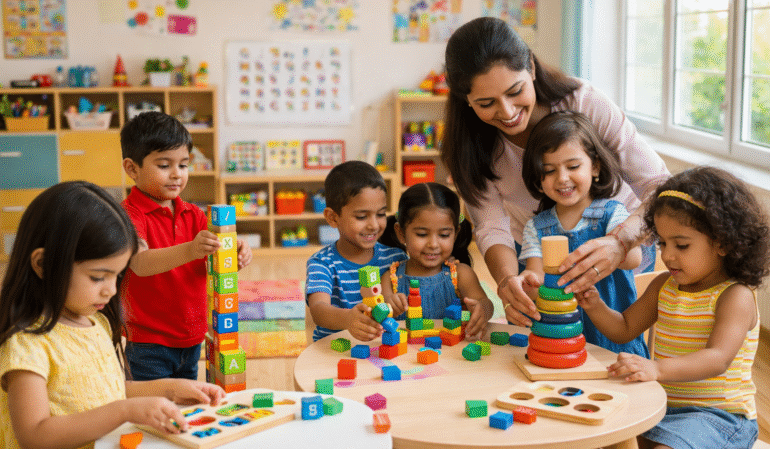
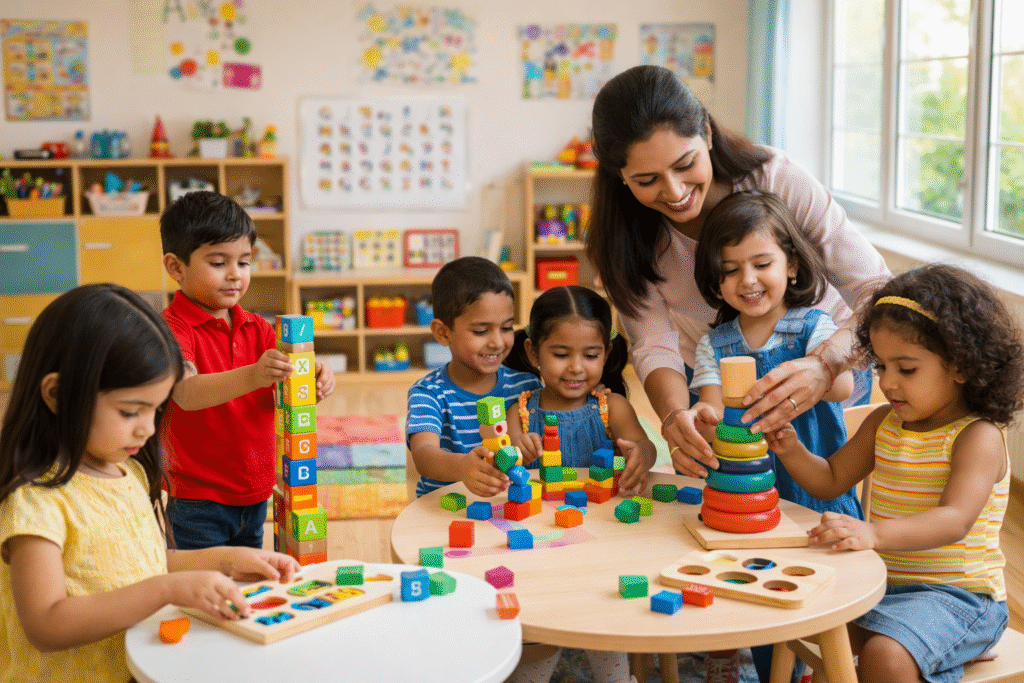
Play is the foundation of preschool education. Through play-based learning, children explore the world around them in a natural and enjoyable way. Activities such as role play, building blocks, drawing, music, and outdoor games help children develop multiple skills at once.
Play encourages imagination, improves motor skills, strengthens social bonds, and enhances problem-solving abilities. Most importantly, children learn without pressure, making learning a positive experience rather than a stressful one. This approach lays the groundwork for a lifelong love of learning.
How Preschool Supports Emotional Development
Preschool is often a child’s first experience away from parents for extended periods. This environment helps children learn emotional independence and self-regulation. They begin to understand emotions like happiness, frustration, excitement, and disappointment.
With guidance from teachers, children learn how to express feelings in healthy ways and resolve small conflicts with peers. These early emotional lessons help children develop patience, empathy, and resilience—skills that are essential throughout life.
Building Social Skills Through Preschool
Social interaction is a key benefit of preschool education. Children learn how to interact with peers from different backgrounds, personalities, and abilities. Group activities teach them cooperation, teamwork, and respect for others.
Through shared experiences such as circle time, group games, and collaborative projects, children develop friendships and learn important social rules like listening, waiting for turns, and following group instructions. These experiences prepare them for future classroom environments.
Parental Involvement in Preschool Learning
A strong connection between parents and preschool enhances a child’s learning experience. Good preschools maintain open communication with parents through regular updates, meetings, and progress reports.
When parents reinforce learning at home—by reading together, talking about daily activities, and encouraging curiosity—children gain confidence and consistency in their learning journey. Preschool works best when parents and teachers collaborate as a team.
Common Myths About Preschool
Many parents believe that preschool is only about academics or that it puts unnecessary pressure on young children. In reality, preschool focuses on overall development rather than formal academic achievement.
Another common myth is that children must already know basics like letters or numbers before joining preschool. In fact, preschool is designed to introduce these concepts gradually, based on each child’s readiness and interest.
Long-Term Impact of Preschool Education
Research shows that children who attend quality preschool programs often perform better academically and socially in later years. They tend to show stronger communication skills, better emotional control, and greater adaptability in school environments.
Preschool also helps children develop a positive self-image and confidence, which influences their future learning and relationships. These early advantages often continue well into primary education and beyond.
Preschool is not just a place where children spend time—it is an environment where lifelong skills begin to take shape. From emotional growth and social interaction to cognitive development and independence, preschool supports every aspect of early childhood development.
Understanding what preschool truly offers helps parents make informed decisions for their children. By choosing a nurturing and well-structured preschool, parents give their child a meaningful head start toward a confident, capable, and successful future.