

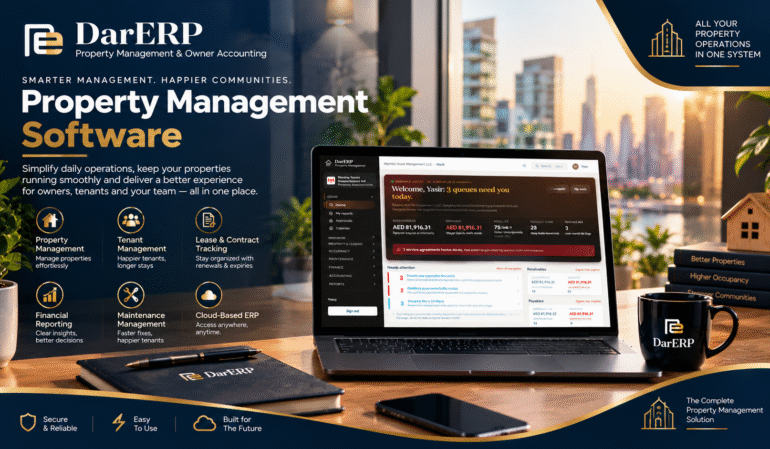
Managing real estate properties in the UAE involves several responsibilities, including tenant administration, lease agreements, rental payments, maintenance coordination, and financial reporting. As property portfolios expand, handling these activities through spreadsheets and manual processes can become increasingly challenging. Landlords, real estate companies, and property managers need an organized system that connects daily operations with accurate financial information.
Property Management Software UAE provides a centralized platform for managing rental properties, tracking tenancy activities, and maintaining important business records. It helps reduce repetitive administrative work while improving visibility across residential and commercial portfolios. Understanding how property management software works can help UAE real estate businesses choose technology that supports efficient operations and long-term growth.
What Is Property Management Software?
Property management software is a digital solution designed to help property owners, landlords, developers, and real estate companies manage their properties through one connected system. It brings together information about buildings, rental units, tenants, lease contracts, payments, maintenance requests, and financial transactions.
Instead of maintaining separate records for every department, a modern real estate management system allows authorized employees to access relevant information from a centralized database. Leasing teams can review tenancy agreements, accountants can monitor rental collections, and property managers can oversee daily activities.
This connected approach simplifies property administration and helps businesses maintain more consistent records.
How Does Property Management Software Work in UAE?
Property management software works by connecting different activities throughout the rental property lifecycle. Every property, unit, tenant, and lease can have its own record, allowing related information to remain organized.
For example, when a new tenant rents an apartment, the property manager records their details, tenancy agreement, rental amount, security deposit, and payment schedule. The system then connects this information with the relevant property and unit.
As the tenancy continues, employees can update payment records, manage maintenance requests, monitor contract expiry dates, and prepare financial reports. This reduces the need to enter identical information into multiple applications.
Key Features of Property Management Software UAE
A reliable property management platform should support operational and financial responsibilities while remaining simple enough for employees to use consistently.
Essential capabilities include:
- Property and tenancy operations: Building administration, unit availability, tenant profiles, lease registration, contract renewals, occupancy monitoring, maintenance requests, and document storage.
- Financial and reporting operations: Rental billing, payment schedules, post-dated cheque tracking, property expenses, owner accounts, financial reconciliation, user permissions, and portfolio performance reports.
The main benefit comes from connecting these functions rather than handling them as separate processes.
Step 1: Register Properties and Rental Units
The first step involves creating accurate records for buildings and rental units. Property managers can organize information such as property location, unit number, ownership details, rental value, occupancy status, and property category.
A centralized property portfolio database makes this information easier to maintain across multiple buildings.
DarERP helps real estate businesses organize property records within a connected management environment, supporting more structured administration across residential, commercial, and mixed-use assets.
Accurate property information also provides the foundation for managing leases, rental payments, and maintenance activities.
Step 2: Manage Tenant Information and Lease Agreements
Once property records are created, the next step is maintaining tenant profiles and tenancy agreements. These records may include tenant contact details, contract dates, rental terms, payment schedules, security deposits, and supporting documentation.
A digital tenancy lifecycle management system keeps this information connected with the appropriate rental unit.
Property teams can review active contracts, identify approaching lease expirations, and prepare renewal documentation more efficiently.
For Dubai properties, organized tenancy information can also support Ejari-related administrative processes, while other emirates may have different registration requirements.
Step 3: Track Rent Collection and Payment Schedules
Rental payment management is one of the most important functions of property software. Once a tenancy agreement is recorded, the relevant installment schedule can be maintained within the tenant account.
Finance teams can monitor expected rent, completed payments, upcoming dues, and outstanding balances.
A centralized rental receivables management solution provides better visibility into collection activity without requiring accountants to manually combine several payment registers.
Post-dated cheque tracking is also useful for UAE rental arrangements. Software can organize cheque details, maturity dates, and payment status alongside tenancy records.
Step 4: Connect Property Accounting With Financial Transactions
Property operations involve financial activities beyond rental income. Companies also handle maintenance expenses, supplier invoices, utility charges, deposits, service costs, and owner-related payments.
An integrated property accounting solution helps connect these transactions with specific properties, units, tenants, or owners.
DarERP Property Management Software supports connected accounting and property workflows, helping real estate businesses organize operational and financial records in one environment.
This makes it easier to review property income, monitor expenses, and maintain consistent accounting information.
Step 5: Organize Maintenance Requests and Work Orders
Maintenance management plays an important role in protecting property condition and supporting tenant satisfaction. Common requests may involve plumbing, electrical systems, air conditioning, cleaning, or general repairs.
A digital maintenance workflow helps employees record reported issues, assign tasks, monitor progress, and maintain repair histories.
When service requests are connected with individual property records, managers can identify recurring problems and review maintenance activity more efficiently.
This also supports better coordination between property teams and external contractors.
Step 6: Manage Property Owners and Financial Statements
Many property management companies in the UAE manage assets belonging to different landlords or investors. Each owner may require separate information about rental income, operating expenses, outstanding balances, and property performance.
A centralized landlord accounting system helps organize these transactions while keeping financial records associated with the correct owner.
Property managers can use this information to prepare owner statements and provide clearer updates about managed assets.
Step 7: Monitor Property Performance Through Dashboards
Property management software also helps businesses understand how their portfolios are performing.
Management dashboards can present information about occupancy levels, rental collections, overdue balances, lease renewals, operating expenses, and maintenance activities.
A real estate portfolio analytics dashboard helps decision-makers identify trends and understand which properties require attention.
DarERP UAE supports connected property and financial reporting, helping businesses maintain organized information for management analysis.
Benefits of Using Property Management Software in UAE
Using centralized property technology can improve business efficiency by reducing repetitive data entry, organizing tenant information, and connecting operational workflows.
It also improves financial visibility by keeping rental payments, expenses, and related transactions easier to review.
For companies managing multiple properties, a connected system can support better collaboration between leasing, accounting, maintenance, and management teams.
As portfolios grow, structured digital processes can help businesses handle additional tenants and transactions without creating unnecessary administrative complexity.
Who Should Use Property Management Software?
Property management software can benefit landlords, developers, real estate companies, asset managers, and businesses managing rental properties on behalf of different owners.
Small landlords may use it to organize leases and payment records, while larger companies may require integrated accounting, owner statements, maintenance workflows, and multi-property reporting.
The right platform depends on the number of properties, business structure, financial requirements, and operational complexity.
How to Choose the Right Property Management Software in UAE
Businesses should begin by identifying their most important property management requirements. These may include lease administration, rental collection, post-dated cheque tracking, maintenance coordination, accounting, owner reporting, and document organization.
Ease of use, data security, implementation support, and scalability should also influence the selection process.
Requesting a practical demonstration can help determine whether the platform supports everyday activities and connects operational information effectively.
Final Thoughts
Property management involves several connected responsibilities that require accurate information and consistent workflows. Managing these activities manually can become difficult as rental portfolios expand.
Property Management Software UAE provides a structured approach to managing properties, tenants, leases, rental collections, accounting, maintenance, and financial reporting within one centralized environment.
By understanding how these systems work, real estate businesses can identify opportunities to simplify daily operations and improve financial oversight.
For UAE landlords and property management companies, adopting suitable technology can create a stronger foundation for organized, efficient, and scalable real estate management.
Frequently Asked Questions
1. What is Property Management Software UAE?
Property Management Software UAE is a digital platform that helps landlords and real estate businesses manage properties, tenants, lease agreements, rental payments, maintenance requests, accounting, documents, and reporting within one connected system.
2. How does property management software work?
Property management software connects property and tenant records with lease agreements, payment schedules, financial transactions, and maintenance activities. Authorized users can update information, monitor tasks, and review reports through a centralized platform.
3. Can property management software manage multiple buildings in UAE?
Yes. Suitable property management platforms can organize multiple buildings, units, tenants, rental agreements, and financial records within one system. Businesses should verify multi-property management, accounting, and reporting capabilities before implementation.