What Is the Difference Between LKG and Preschool? A Complete Guide for Parents
Choosing the right early education program for your child can sometimes feel confusing.LKG and Preschool Parents often come across terms like preschool, play school, nursery, and LKG, and it can be difficult to understand how they differ from each other. One of the most common questions parents ask is: What is the difference between LKG and Preschool?
Both LKG and Preschool play an important role in early childhood education, but they serve different purposes and focus on different stages of development. Understanding these differences can help parents make better decisions about their child’s early learning journey.
What Is Preschool?
A preschool is an early learning program designed for young children typically between the ages of 2 and 4 years. It introduces children to a structured learning environment for the first time and helps them develop essential skills through play-based activities.
The main focus of education is holistic development, which includes cognitive, emotional, social, and physical growth. Instead of formal academics, encourages learning through exploration, creativity, and interaction.
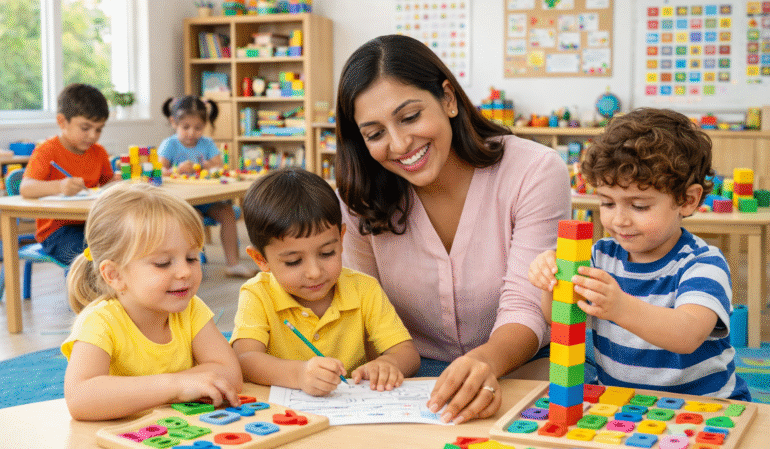
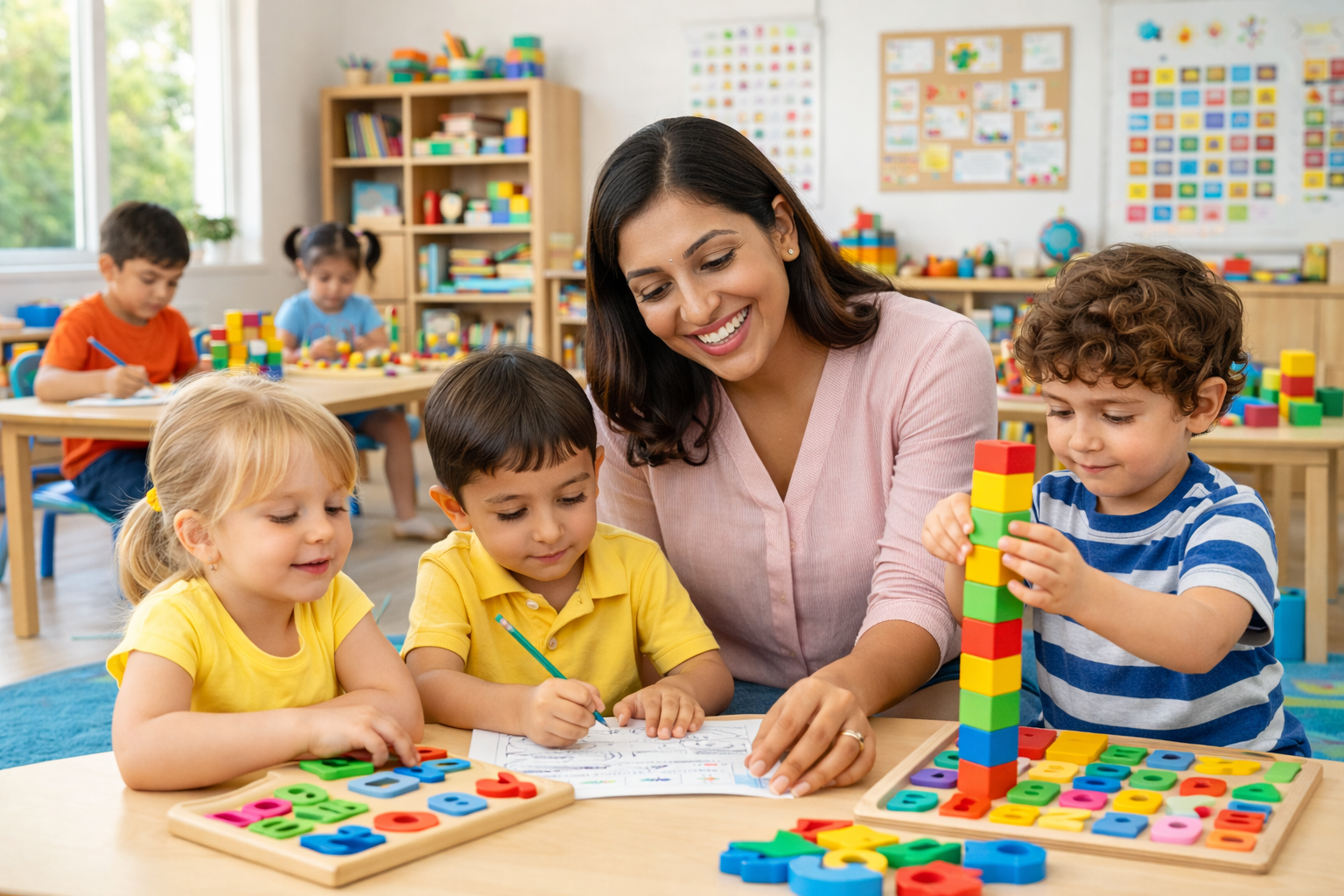
In a preschool environment, children usually participate in activities such as:
- Storytelling and rhymes
- Art and craft
- Music and dance
- Building blocks and puzzles
- Outdoor play and group games
These activities help children develop curiosity, communication skills, and confidence.
What Is LKG (Lower Kindergarten)?
Lower Kindergarten, commonly known as LKG, is the stage of early education that comes after preschool or nursery. It usually includes children between the ages of 4 and 5 years.
Unlike LKG and Preschool introduces more structured learning and begins preparing children for formal schooling. While play-based activities are still included, LKG also focuses on basic academic concepts.
In LKG, children typically start learning:
- Alphabet recognition and basic phonics
- Numbers and simple counting
- Shapes and colors
- Basic writing skills
- Listening and following instructions
LKG helps children gradually transition into a more organized classroom environment similar to primary school.
Key Differences Between LKG and Preschool
Although both programs are part of early childhood education, there are several differences between them.
1. Age Group
One of the main differences between preschool and LKG is the age of children.
- Preschool: Usually for children aged 2 to 4 years
- LKG: Usually for children aged 4 to 5 years
Preschool focuses on introducing children to learning, while LKG prepares them for formal schooling.
2. Learning Approach
Preschool uses a play-based learning approach, where children learn through activities, games, and exploration.
LKG, on the other hand, introduces more structured learning, including early reading and writing skills.
3. Academic Focus
In preschool, academics are minimal. The main goal is to develop social skills, creativity, and independence.
In LKG, children start learning basic academic concepts like letters, numbers, and simple writing exercises.
4. Classroom Structure
Classrooms are usually more flexible and activity-based. Children engage in a variety of activities including play, storytelling, and creative exploration.
LKG classrooms are slightly more structured and follow a schedule that includes learning sessions, worksheets, and guided activities.
5. School Readiness
Helps children become comfortable in a classroom environment and encourages social interaction.
LKG focuses on preparing children for Upper Kindergarten (UKG) and eventually primary school education.
Why Preschool Is Important Before LKG
Many parents wonder whether preschool is necessary before LKG. While it is possible for some children to start directly in LKG, attending preschool offers several advantages.
Preschool helps children:
- Develop communication skills
- Learn to interact with other children
- Become comfortable with teachers and classroom routines
- Build confidence and independence
These skills make the transition to LKG much smoother.
How Parents Can Choose the Right Option
When deciding between LKG and Preschool, parents should consider their child’s age, development level, and readiness.
A child may benefit from preschool if they:
- Are between 2 and 4 years old
- Are new to a structured learning environment
- Need to develop social and communication skills
LKG is usually suitable for children who:
- Are around 4 to 5 years old
- Have already experienced a preschool environment
- Are ready to learn basic academic concepts
The Role of Early Childhood Education
Early childhood education plays a critical role in shaping a child’s future learning abilities. Both LKG and Preschool contribute to different stages of development.
Preschool helps build a strong foundation for social, emotional, and creative growth, while LKG prepares children for formal schooling and academic learning.
Together, these stages support a child’s overall development and help them develop a lifelong love for learning.
Understanding the difference between LKG and Preschool helps parents make informed decisions about their child’s early education. Preschool focuses on play-based learning and social development, while LKG introduces structured learning and basic academics.
Both stages are important in a child’s educational journey. By choosing LKG and Preschool the right program at the right time, parents can ensure their child develops the confidence, curiosity, and skills needed for future success.